


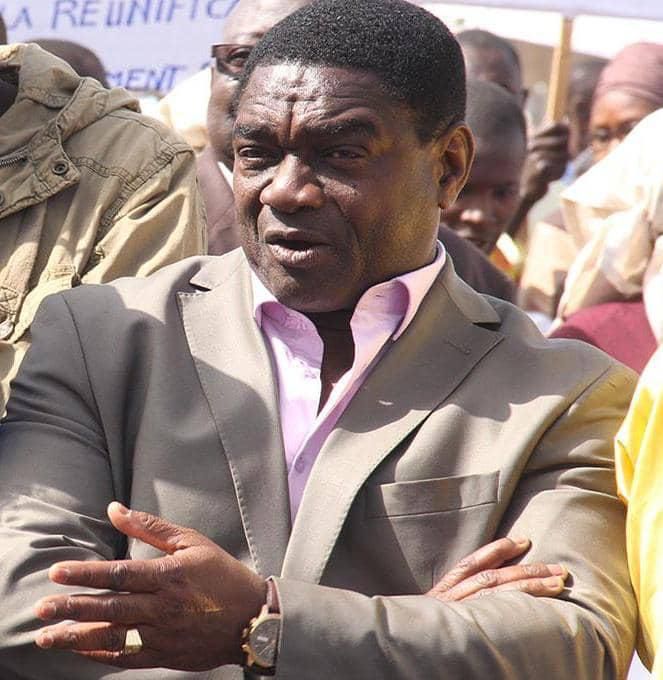
OUR PATHS had crossed at meetings, at the African continental trade union level, especially the default International Confederation of Free Trade Unions (ICFTU), which Nigeria Labour Congress (NLC) joined in 2000, and from 2007, at the International Trade Union Confederation (ITUC).
He was not exactly in the mode of the doyens of the African Labour Movement then, such as Brothers Adiko Niamkey of Cote d’Ivoire or Mada Diop of Senegal, to mention a few in that league from our West African sub-region. Comrade Mademba Sock was a shade different: colourfully dressed, deliberately repressed flamboyance, youthful looking, which belied his real age and seemingly always speaking with a purpose.
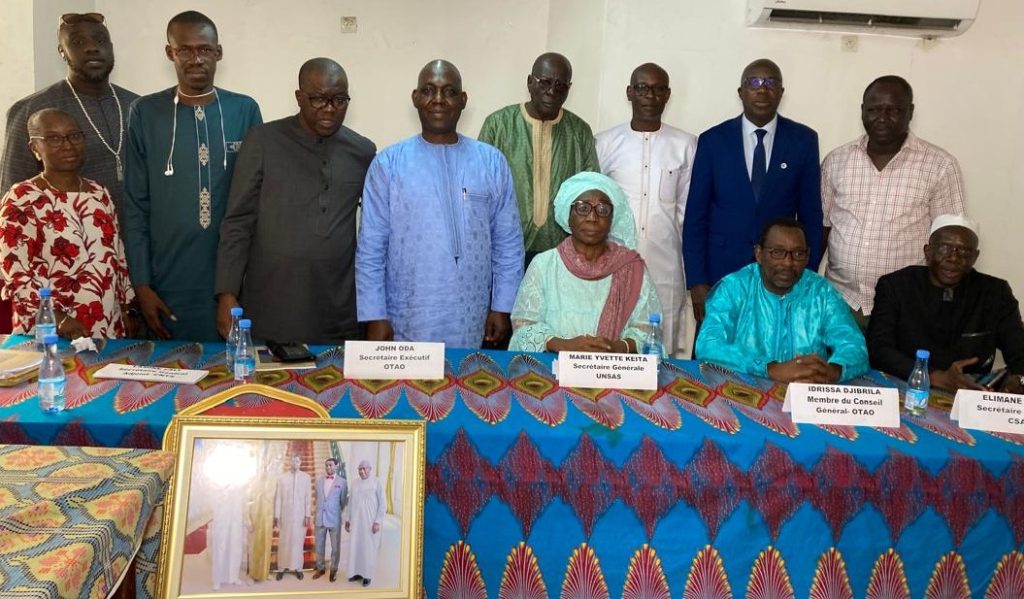
As Comrade Kwasi Adu-Amankwah, immediate past General Secretary of ITUC-Africa, stated in his tribute elsewhere in this publication, Comrade Mademba Sock’s outspoken ability to mould consensus helped us to navigate through the several stalemates which nearly made the turbulent ICFTU-Afro Congress in Hammamet, Tunisia in 2005 end in chaos.

Our paths were to cross again more substantially when he was elected President of the Organisation of Trade Unions of West African (OTUWA) at the end of its revival conference in Abuja in October 2015.
At the beginning of 2016, Comrades Sock along with members of his executive returned to Abuja and following consultations with the NLC, offered me the position of Executive Secretary of OTUWA, to run the Secretariat of the organisation which the October Congress had decided to relocate from Abidjan, capital of Cote d’Ivoire, to Abuja. The Ayuba Wabba-led leadership of NLC had offered to provide Secretariat offices and facilities to the organisation for its immediate take off at its Paschal Bafyau Labour House headquarters in Abuja.
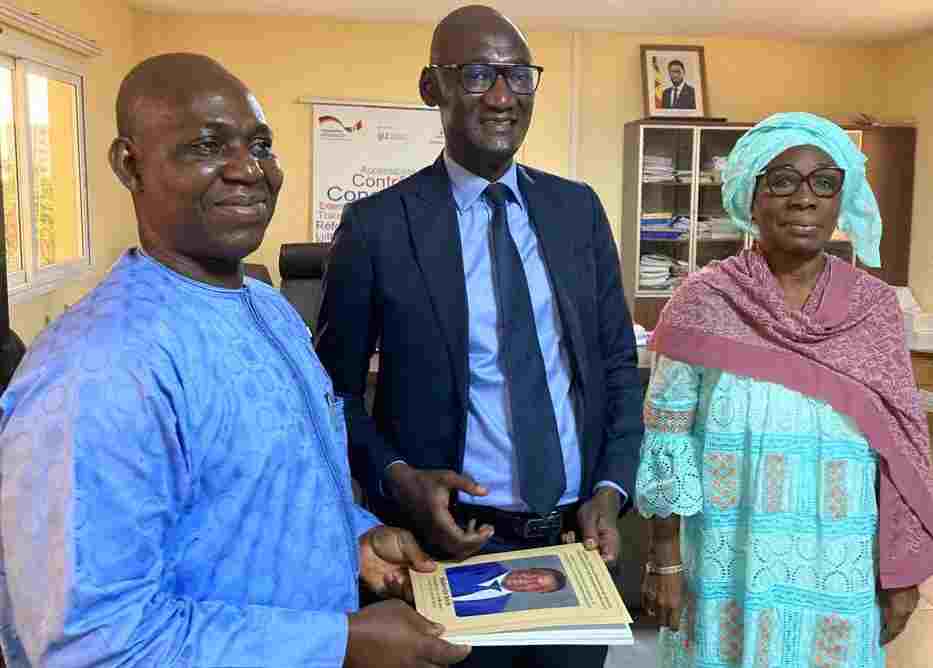
Comrade Sock made several trips to Abuja, meeting Nigerian ministers and top government officials, as well as ECOWAS officials to consolidate the relationship between the host country and OTUWA, and between ECOWAS and OTUWA respectively in this regard. We drafted a headquarters agreement which was to guide our work in Nigeria. Together, we also drafted a Memorandum of Understanding (MOU) with the ECOWAS Commission. He pushed for the actualisation of these documents till his departure to the great beyond two months ago.
In August last year, during what turned out to be his last visit to Nigeria, we had a consequential meeting with Prof. Fatou Sow Sarr, the ECOWAS Commissioner for Human Development and Social Affairs in her office at the ECOWAS Commission. Comrade Sock presented the history of OTUWA, its endorsement by the ECOWAS Council of Heads of State and Government in July 1986 under President Babangida of Nigeria as Chairman, as the agency through which ECOWAS would mobilise West African workers to the integration agenda of the organisation.
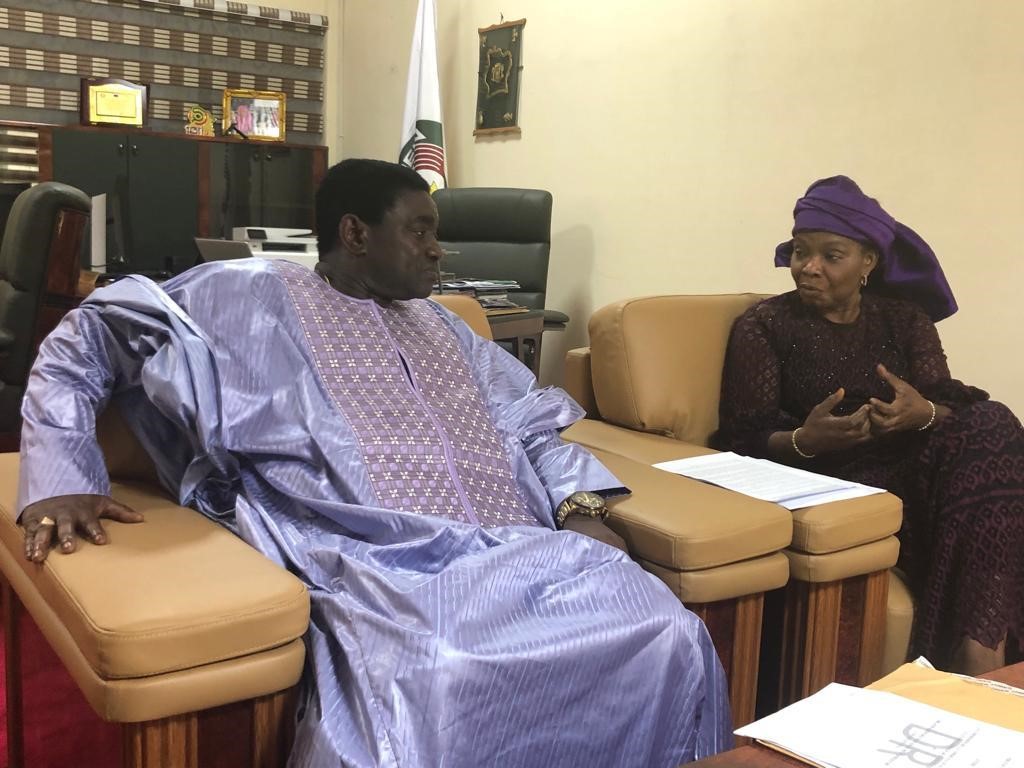
He made a passionate case for ECOWAS to resume relating with the organisation in the mode which the Heads of State of the 15 ECOWAS countries envisaged in its 1986 landmark decision. Prof. Sarr who is a proud daughter of Senegal, promised that the case would be taken up with the ECOWAS Commission authorities.
Comrade Sock, as OTUWA President, had a number of visions for the organisation which were often frustrated by the resource limitations of the secretariat. He was always optimistic about the future of the organisation and would tell us at the Secretariat to continue to be resilient as we would overcome the challenges of funding which will open up opportunities for us to accomplish many of the lofty aspirations contained in the Strategic Plan we had developed within a year of his assumption of office as President of OTUWA.
Looking back from the beginning
Of course, Comrade Mademba Sock had established his reputation as a thorough-bred defender of the working people in his home country of Senegal before he became OTUWA President in 2015. Thanks to Kalidou Diallo, former trade unionist and Minister of National Education, (and Knight of the National Order of the Lion), who said he was Mademba Sock’s companion in struggle, friend and brother, from whom we have a candid knowledge of this leader of one of the biggest trade union centres in Senegal, will devote the remaining part of this tribute to his earlier life.
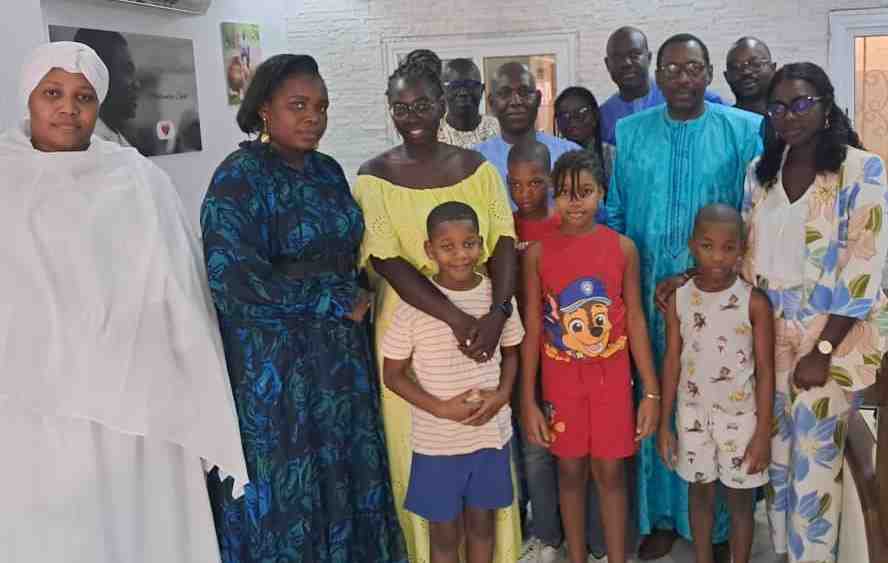
As a kid, his bosom friend, Kalidou Diallo, told us that young Mademba grew up with “a hot temperament”. We are told that upon obtaining Baccalaureate Series A diploma, he enrolled in the Law Faculty at the University of Dakar. That in 1975 he was recruited at Senegal electricity (Senelec) in the payroll department to pay day labourers.
We learned also that he was forced off playing football by his dad in 1968, when young Mademba suffered a fracture playing his beloved football.
We learnt further that Comrade Sock spent his entire professional career at Senelec, where in addition to his law training, he undertook further training in accounting and was on his way to the top of his career having been Head of Department, when in July 1998 he was dismissed with 25 of his Comrades during the big strike by the electricity corporation workers of that year.
He was described as a “bold, reckless (restless?) and eloquent trade unionist” in a tribute by the labour historian friend.
Kalidou Diallo similarly gave account of the turbulent period of the 1990s and how a number of new trade unions and trade union centres emerged out of the dominant CNTS and other single industry unions. He also gave account of how Mademba Sock emerged Secretary General at the constitutive congress of the Union of Autonomous Trade Unions of Senegal (UNSAS) at the Chiekh Anta Diop University of Dakar in 1991.
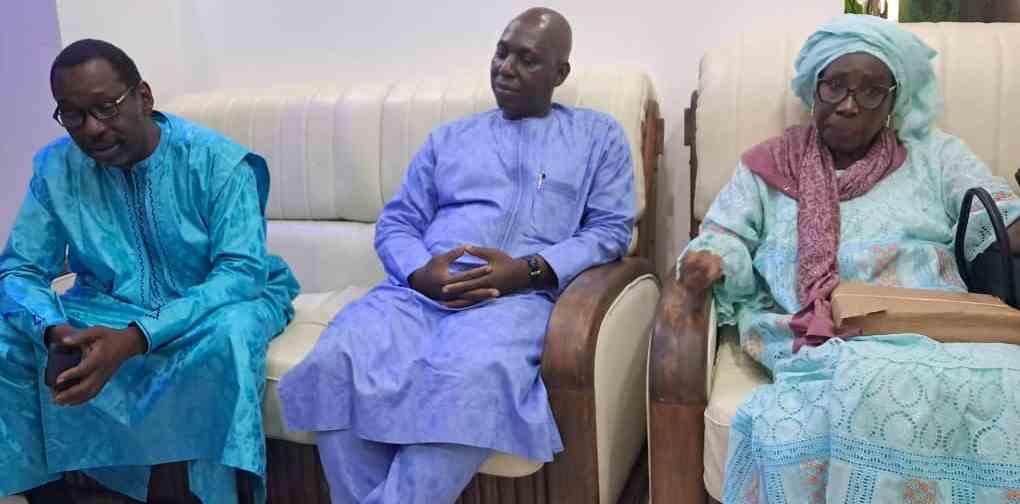
As a result of the strike of Sutelec workers leading to almost an entire national blackout, Mademba Sock was arrested on July 20, 1998, tried on December 8 of the same year and sentenced to 6 months in prison. He was released on January 22, 1999 and dismissed with 25 of his Comrades.
Still following Diallo’s account, a year later in 2000, Mademba Sock entered the Presidential elections in Senegal as a candidate. Though he didn’t do well enough to make it to the 2nd round, the front runner, Mr. Abdoulaye Wade, recognised his importance and went to his residence in Dakar to ask for his support and endorsement in the 2nd round of the elections. We learnt that his only response was that the 25 of his colleagues dismissed during the 1998 strike should be reinstated – excluding himself as he told his visitor that on his part, he will always manage to find work.
After his victory, President Wade kept his word and reinstated all the 25 workers to their job at Senelec and reimbursed their two (2) years’ salary arrears.
We also learnt that while away on a private trip to the USA, he was appointed Chairman of the Board of Directors (PCA) of the Senegalese Renewable Energy Agency (ASER), a position he was said to have held till his death. He was also a member of the Economic, Social and Environmental Council (CESE), President of the Health and Social Affairs Commission, as well as President of the Social Security Fund and Coordinator of the Convergence of Senelec Workers Union (CSTS), which brings together the Six Senelec Workers Unions.
Comrade Mademba Sock’s qualities also include being a great mentor for both male and female comrades, and preparing them for leadership. In preparing for leadership, he taught himself to speak English which made it very convenient to relate with the English-speaking comrades who lag far behind in learning how to communicate with their French-speaking counterparts. He read virtually all his official speeches in English while in our programmes in Abuja.
Two of the female comrades that UNSAS under his leadership threw up to work with us at the OTUWA level – Sisters Marie Thiame Soumare and Nafissa Samb – are some of the most dedicated comrades in the trade union movement I ever worked with over the years.
In Melbourne, at the last ITUC World Congress in 2022, I was amazed that Sister Marie Soumare, who didn’t have much understanding of English years ago, was able to read UNSAS solidarity message in very clear English.
From the above background on Comrade Mademba Sock, it could be seen that in his five decades service to Senegalese, West African and African workers, he came prepared for the job, as a law graduate with advance knowledge of Accounting studies. There were not many in his generation who went into the trade union movement with this high level of academic qualification, both in the sub-region and continent-wide.
He similarly never carried his rough encounter with the state in his service of Senegalese workers as any badge of honour. Indeed, it was only in August 2023, during his last visit to Nigeria, at a meeting with the new NLC President, Comrade Joe Ajaero, that he casually mentioned that as an electricity worker, he had been imprisoned for 6 months, for leading their strike. And this was only when he heard that Comrade Ajaero was General Secretary of the Electricity Union in Nigeria.
Our late President didn’t have false airs of importance around him!
Comrade Mademba Sock has left us at a critical crises time in the West African sub-region. We are however eternally grateful to the Sock clan for giving us such a great Pan Africanist, a quintessential and stable trade unionist and an undisputable leader.
To his wives – Ndeye Matou Niang, Fatou Diop and Viviane Preira, our hearts are with you in this difficult time and we pray that you will stand together in unity to honour his memory. To Anta Sock and your other siblings, you must continue to be rallying points of an outstanding and proud father who have gone ahead to eternity. To his younger brother, Pope Ale Sock, we trust you would step in to lead the Sock Clan.
To our comrades in UNSAS, we condole you, trusting that the transition in leadership would be without hitches or hiccups.
And our condolences to the working people of Senegal and the entire nation for loosing such an illustrious son.
Adieu Comrade Mademba Sock!
Comrade Odah is the Executive Secretary Of OTUWA
