


BY OWEI LAKEMFA
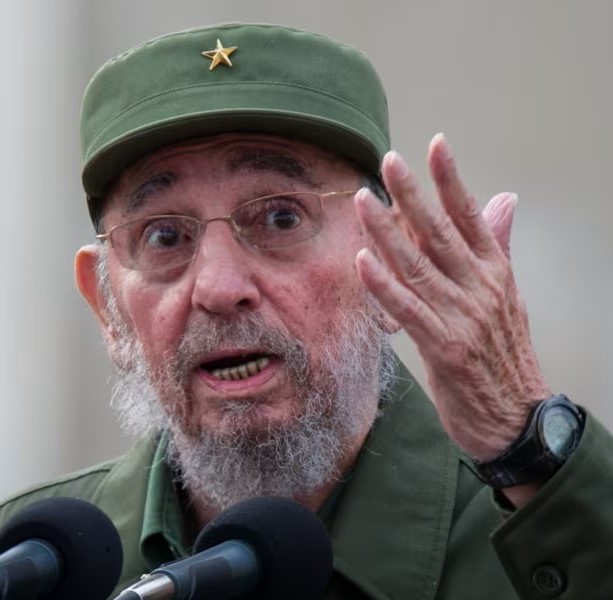
I STOOD before a select audience in the Cuban Embassy, Abuja. We had gathered on Wednesday, November 25, 2026, for a symbolic flower laying in honour of Fidel Castro, who had, exactly ten years before, joined our ancestors. I wondered what I could say about Fidel that had not been said or written across the world. His uncommon love for humanity and social justice? His unmatched courage and the fear he drove into the hearts of bullies across our globe? Dedication to education not just in Cuba, but globally, especially Africa? His unparalleled moral conviction and dedication to the colonized and oppressed?
The revolution he led had built Cuba into a healthcare superpower which, from the 1960s, sent doctors and medical brigades across the world, especially the underdeveloped. Cuban healthcare had become so developed and sophisticated that when COVID-19 broke out and all countries of the world shut their borders, Cuba was the only country that kept its open to all, including victims of the pandemic. In fact, when, in March 2020, the British cruise ship, MS Braemer, with 682 passengers, was hit by COVID-19 and countries on its path refused to allow the ship anchor to save the lives of passengers and crew, Cuba invited the ship to dock at its Mariel Port, evacuated the passengers and got them safely flown from Havana to Britain.

This was the story I told the audience and my happiness that today, despite the US resting its gigantic frame on Cuba in an attempt to asphyxiate it, the heroic Cuban people, led by Miguel Diaz-Canel, have refused to give up. For them, like the Mexican Comrade Emiliano Zapata urged the oppressed: “It is better to die on your feet than to live on your knees.” This is not surprising because the Cubans are worthy heirs of Fidel, whose slogan was “Patria o muerte” (Homeland or Death).
Cuba also produced three COVID-19 vaccines, Abdala, Soberana 02 and Soberana Plus, which it distributed around the world, forcing prices of Western-produced ones to fall or be offered free.
ALSO READ: Non-Remittance Of Pension Contributions: Workers’ Retirement Savings Not Employers’ Working Capital; By Ivo Takor
I had referred to Fidel as an ancestor. Yes, an African ancestor. Not just because African blood also flowed in his veins. But when we Africans were at our lowest ebb with Apartheid South Africa terrorists backed by the United States (US) and the United Kingdom (UK) ceaselessly invading countries like Angola and Zambia and enslaving Namibia and South Africa, Cuba, led by Fidel, sent troops. Some four thousand Cuban youths never returned; they are buried under the African skies. This sacrifice by our Cuban brothers and sisters led directly to the independence of Namibia and South Africa and the total liberation of the African continent.
As I stood there wondering what new things I could say about the Comandante, my mind raced back to my thoughts on November 19, 2026, while watching the trilateral meeting of the most powerful men in the world; Xi Jingping of China, Russia’s Vladimir Putin and Donald Trump of the US. A parallel meeting of some thirty European leaders had huddled together in Germany, weeping about their gambit in Ukraine.
I had thought that none of these leaders measured up to Fidel, who for decades made a tiny country of eleven million people, with no nuclear weapons, oil and gas, a centre of universal attention. None of these had the charisma, carriage and moral suasion of Fidel. Whereas Fidel had personal followership across the world, with many identifying themselves as Fidelistas and Castroites, I do not know of any group identifying themselves Xists, Putinists or Trumpists. I have come across persons who proudly named themselves or their children after Fidel Castro. I don’t think anybody who names himself or child after Donald Trump will be seen as being okay.
ALSO READ: Another Story Again! 2027 And The Echoes Of 2Baba’s Warning To Nigeria; By Iduh Onah
This was the story I told the audience and my happiness that today, despite the US resting its gigantic frame on Cuba in an attempt to asphyxiate it, the heroic Cuban people, led by Miguel Diaz-Canel, have refused to give up. For them, like the Mexican Comrade Emiliano Zapata urged the oppressed: “It is better to die on your feet than to live on your knees.” This is not surprising because the Cubans are worthy heirs of Fidel, whose slogan was “Patria o muerte” (Homeland or Death).
I also urged the Saharawi not to give up, even as there are strenuous attempts by Morocco, the US and the West to recolonize their homeland. I similarly encouraged the Venezuelans, whose President, Nicolas Maduro, and wife, Cilia Flores, were abducted in their bedroom by the US and are being held hostage for Venezuelan oil and gas, not to surrender.
When, on the eve of the Fidel commemoration, the Director-General of the World Health Organization (WHO) Dr. Tedros Adhanom Ghebreyesus, visited the William Soler Pediatric Hospital and its Heart Center in Cuba, he met a one-year-old girl awaiting open-heart surgery. There were also other children due for surgery but being denied due to US sanctions. As a medical doctor, Ghebreyesus felt sorrowful that while the Cuban doctors are professional and know the needs of their patients, what can they do when their country is deprived of the means to treat them? What can hospitals, starved of medicines, supplies, spare parts and electricity, do to save lives? But, as the title of the 1940 novel by American Ernest Hemingway, who lived in Cuba, goes, “For Whom the Bell Tolls.” Indeed, it tolls for me and thee.
Dr. Onuche Audu, President of Cuban-trained Nigerian graduates, who anchored the event, said a decade ago, when Fidel passed, he was in Havana. He wept, not just because many of them might not have become medical doctors, but for Fidel, and also for the fact that Fidel passed some hours after he qualified as a specialist. It was like Fidel waited for him to qualify before departing.
ALSO READ: Come November: Heroes Of Iva Valley, Aba, Borgu, Iseyin, Jos, Satiru, Benin, Others; By Omotoye Olorode
Miriam Morales Palmero, Cuban Ambassador to Nigeria, told the gathering: “From the very beginning of his struggle, he (Fidel) understood that a true society can only be built on the foundation of equity and human dignity. His thought and action were guided by the conviction that fundamental rights—such as access to education, healthcare, and a decent life — should not be the privileges of a few, but guaranteed achievements for every citizen without distinction.”
She added: “We firmly believe in diplomatic dialogue based on mutual respect, sovereign equality, and non-interference in the internal affairs of States, while simultaneously maintaining the firm and unyielding determination to defend our sovereignty, our independence, and our right to build our own future.”
Today, ten years after Fidel’s departure and five years after its heroic battles against COVID-19, the Cuban healthcare system is tottering. This is not because it no longer has the dedicated doctors and healthcare providers or has stopped producing them. It is not because there is a change in policy or leadership. Simply that the US has decided to strangulate Cuba by stopping countries from trading with it in commodities like fuel to run its electricity plants and transport system. The US is stopping Cuba from buying spare parts and medicines. The Trump regime has made trade with Cuba by any country a crime punishable with sanctions.
ALSO READ: Marriage Breakup Drama In Courts, Podiums And Pulpits; By Hassan Gimba
When, on the eve of the Fidel commemoration, the Director-General of the World Health Organization (WHO) Dr. Tedros Adhanom Ghebreyesus, visited the William Soler Pediatric Hospital and its Heart Center in Cuba, he met a one-year-old girl awaiting open-heart surgery. There were also other children due for surgery but being denied due to US sanctions. As a medical doctor, Ghebreyesus felt sorrowful that while the Cuban doctors are professional and know the needs of their patients, what can they do when their country is deprived of the means to treat them? What can hospitals, starved of medicines, supplies, spare parts and electricity, do to save lives? But, as the title of the 1940 novel by American Ernest Hemingway, who lived in Cuba, goes, “For Whom the Bell Tolls.” Indeed, it tolls for me and thee.
