


- Civil Servants Decry Further Hike In Petrol Price, Transportation
By Our Reporter, With Agency Reports
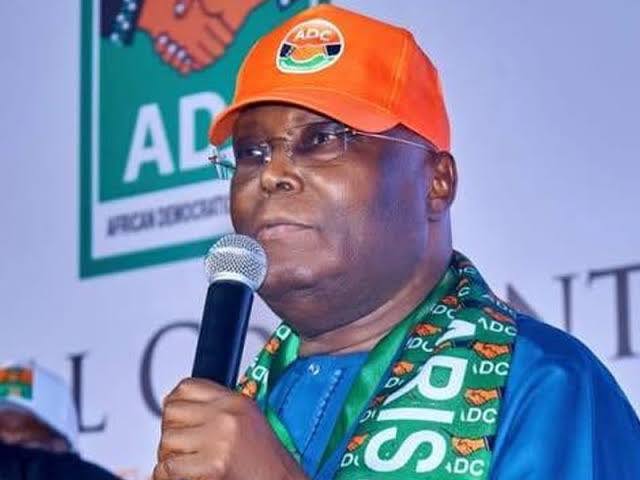
FORMER Vice-President, Atiku Abubakar, and Presidential candidate of the African Democratic Congress (ADC), has proposed a transparent production subsidy for petroleum products refined in Nigeria to reduce pump prices, just as civil servants in the Federal Capital Territory (FCT) say the increase in the pump price of petrol has raised transportation fares and put additional pressure on their livelihoods.
Atiku, while addressing news conference on Friday in Abuja, said the subsidy, if implemented, would apply exclusively to petroleum products refined locally and sold to Nigerians, excluding imported petroleum products.
He said the subsidy would be operated within a fixed spending limit, subject to National Assembly approval and independent audits to ensure transparency and accountability.
According to him, the intervention would reduce fuel price, stimulate domestic refining, create jobs and improve Nigerians’ purchasing power amid rising costs of living.
“If elected, from May 29, 2027, I will introduce a transparent production subsidy for petroleum products refined in Nigeria and sold to Nigerians.
“Think of a Nigerian rice miller. Government helps lower the cost of milling so the rice can sell for less. More families can afford it.
“As sales grow, the miller buys more rice from Nigerian farmers and employs more Nigerians to process, package and transport it.
“That means cheaper rice for families, more business for farmers and more jobs for Nigerians. Our production subsidy will work the same way.
“Government support must bring prices down. Only products confirmed to be refined in Nigeria will qualify. Imported products will not,” he said.
Atiku urged President Bola Ahmed Tinubu to adopt measures that would provide immediate relief to Nigerians to ease the hardship.
He said the removal of petrol subsidy had increased the costs of transportation, food, production and logistics, placing additional pressure on households, workers, farmers and businesses.
The former vice-president said government intervention should focus on reducing the underlying cost of energy rather than relying solely on palliatives to cushion hardship.
He maintained that Nigerians needed practical economic measures capable of lowering costs and improving household welfare, rather than temporary relief that failed to address underlying pressures.
Atiku urged the president to adopt the proposed framework regardless of its origin, saying that priority should be placed on reducing the burden on Nigerians.
“If responsible intervention can lower prices, intervene, if changing course can help Nigerian families, change course,” Atiku said.
Civil Servants Decry Further Hike In Petrol Price, Transportation
Meanwhile civil servants in the Federal Capital Territory (FCT) say the increase in the pump price of petrol has raised transportation fares and put additional pressure on their livelihoods.
The civil servants made this known in an interview with the News Agency of Nigeria (NAN) in Abuja on Friday.
NAN reports that a litre of petrol which was sold between N1,180 and N1350 is now selling for between N1,388 and N1,450 in the FCT.
Mrs Falmata Musa said the increase had significantly affected the amount she spent on transportation to and from work daily.
“Before, I used to spend N2,500 on transportation daily, but since this increase, I now spend N3,500 ,” she said.
Musa added that the situation had affected her household expenses as more money was now being spent on transportation.
Mrs Comfort Abegunde said the petrol price hike had significantly increased her daily transportation costs, forcing her to divert money meant for food and other household needs to transport fares.
“Higher fuel costs have also pushed up food prices, while some private car owners can no longer afford to fuel their vehicles and have resorted to public transportation.
“The situation has also affected my attendance at the office as I presently struggle to secure affordable transportation to work, which affects my productivity,” she said.
According to her, salaries have not increased at the same pace as the cost of living, leaving civil servants struggling to manage their limited incomes amid rising expenses.
Mr Olamide Ibrahim told NAN that he presently carried passengers to get additional money for fuel but had stopped because the rising fuel prices had made it difficult for him to drive to town.
“I normally buy fuel of N24,000 daily to and from work, but since this recent hike, I have to buy same quantity at N33,500 daily.
“Everybody is now looking for cheaper means to survive. That is why I have decided to stop driving to work,” he added.
Muhammad Lawal said workers were already dealing with the rising cost of living, and the increase in transportation costs had made it more difficult to manage their monthly salaries.
“I now spend more on transportation to and from work, leaving me with less money for food, school expenses, utility bills and other household needs.
“My salary has remained the same while the cost of transportation and other essential items continue to rise,” he said.
Another civil servant, Shim Felix, said the recent increase in petrol prices had increased his transportation costs, putting serious strain on his daily income.
“Every day, I spend more money on transportation. It is taking a significant part of the income I normally use for food, bills and other basic needs,” he said.
Felix said the situation was very difficult for workers who depended on public transportation, as increase in fuel prices was often followed by higher transport fares.
“Even when I try to reduce my expenses, I still have to report to work, so transportation is not something I can completely avoid,” he said.
He added that the challenge was not simply about buying petrol but how much of his income was being consumed by the rising cost of living.
Some of the workers said they had resorted to measures such as carpooling, using cheaper means of transportation like train, staff buses and cutting other expenses to cope with the situation.
The civil servants urged the government to introduce measures that would improve public transportation and reduce the cost of living to ease the burden on workers.
