



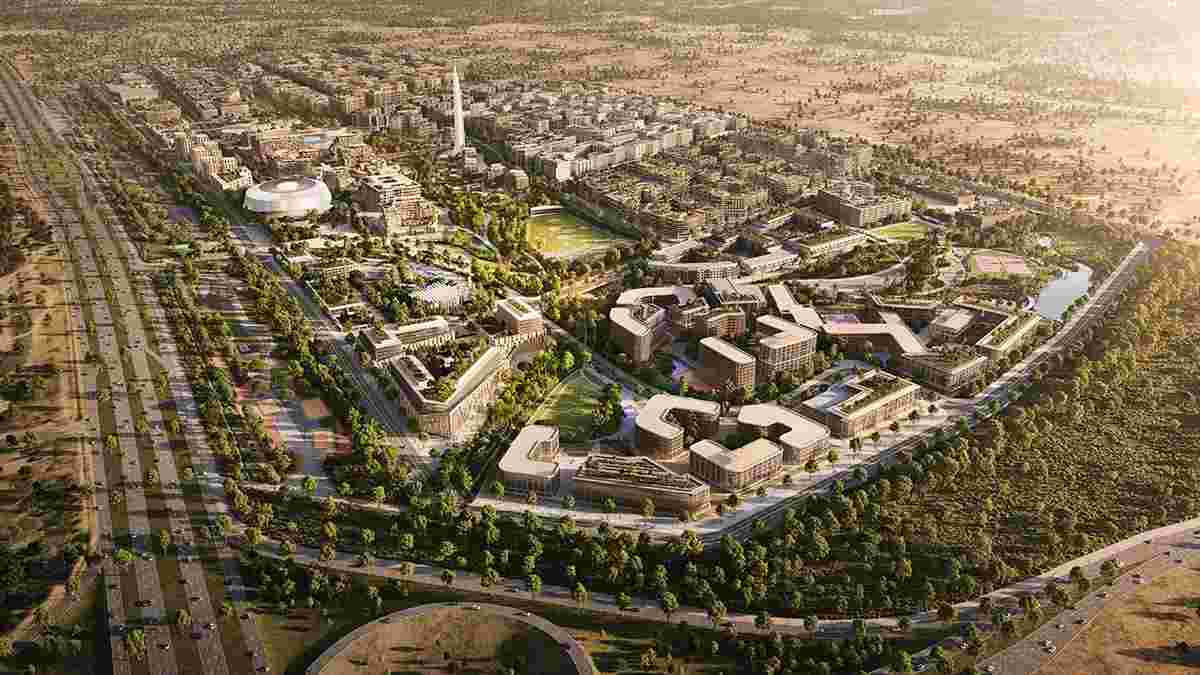
PRESIDENT Bola Ahmed Tinubu on Thursday described the proposed Abuja City Walk as “a window to a multi-billion-dollar future” for the Federal Capital Territory (FCT), saying the 250-hectare mixed-use development would drive investment, job creation and economic growth.
Represented by Vice President Kashim Shettima at the unveiling of the project’s Sales Office and Experience Centre in Abuja, the President said the development ranked among the most ambitious private-sector investments in Nigeria’s history.
According to him, the project aligns with his administration’s commitment to transform Abuja into a global centre for governance, commerce and modern living.
Located in Lugbe along the Abuja Airport Expressway corridor, Tinubu said the Abuja City Walk would serve as Nigeria’s premier gateway to the world. Inspired by Dubai City Walk but tailored to Nigeria’s unique needs, he said the development pushes the frontiers of architecture and engineering on the continent.
The President noted that the project, being developed under a Public-Private Partnership (PPP) between the FCT Administration and private investors, reflects the government’s belief that sustainable national development requires strong collaboration with the private sector.
He added that granting the corridor Free Trade Zone status would promote regional commerce, medical tourism, premium retail and high-end hospitality by reducing trade barriers and creating an investment-friendly environment.
Tinubu assured local and foreign investors that Nigeria remains open for business, saying government was strengthening its legal, physical and financial frameworks to protect investments, guarantee returns and remove unnecessary bureaucratic bottlenecks.
He also commended FCT Minister Nyesom Wike for driving reforms that have revived the long-dormant Abuja Technology Village corridor.
“For 20 years, the Abuja Technology Village corridor lay dormant. Through aggressive land administration reforms and the eradication of bureaucratic inertia, it is being transformed into a bustling construction hub,” he said.
Beyond its luxury residences, hotels and office towers, Tinubu said the project’s greatest impact would be its contribution to employment and economic development.
He said the Abuja City Walk is expected to generate tens of thousands of direct and indirect jobs during construction and operation, while boosting supply chains across sectors ranging from cement production to digital technology services.
Speaking at the event, Wike said the land was allocated for the project following the signing of a Memorandum of Understanding (MoU) that includes clearly defined delivery timelines.
He disclosed that delivering the Sales Office and Experience Centre was one of the milestones scheduled to coincide with Tinubu’s third anniversary in office.
The minister said he personally chaired the project development committee to fast-track approvals, adding that the FCT Administration had fulfilled its obligations, including granting all necessary approvals and providing supporting road infrastructure.
While assuring the developers of continued government support, Wike warned that the administration would enforce the terms of the agreement.
“We also agreed in the MoU that in the next one year, you’ll achieve certain milestones. If that is not achieved, we’ll take back our land,” he said.
Earlier, Executive Director of Link Developments, the project’s master developer, Dr Kassim Gidado, said Abuja City Walk is envisioned as a “city within a city” that combines innovation, commerce and community living.
He explained that although inspired by Dubai City Walk, the project has been designed to reflect Abuja’s socio-cultural and environmental realities.
According to Gidado, the project will feature a Google Tech Village, a knowledge park housing two universities, a museum, library, healthcare facilities, shopping malls, five-star hotels and exhibition halls.
Other planned facilities include what is projected to become West Africa’s largest multi-purpose indoor arena with cinemas and a gym, as well as residential neighbourhoods, parks, corporate office towers, police and fire stations, places of worship and other essential public infrastructure.
