


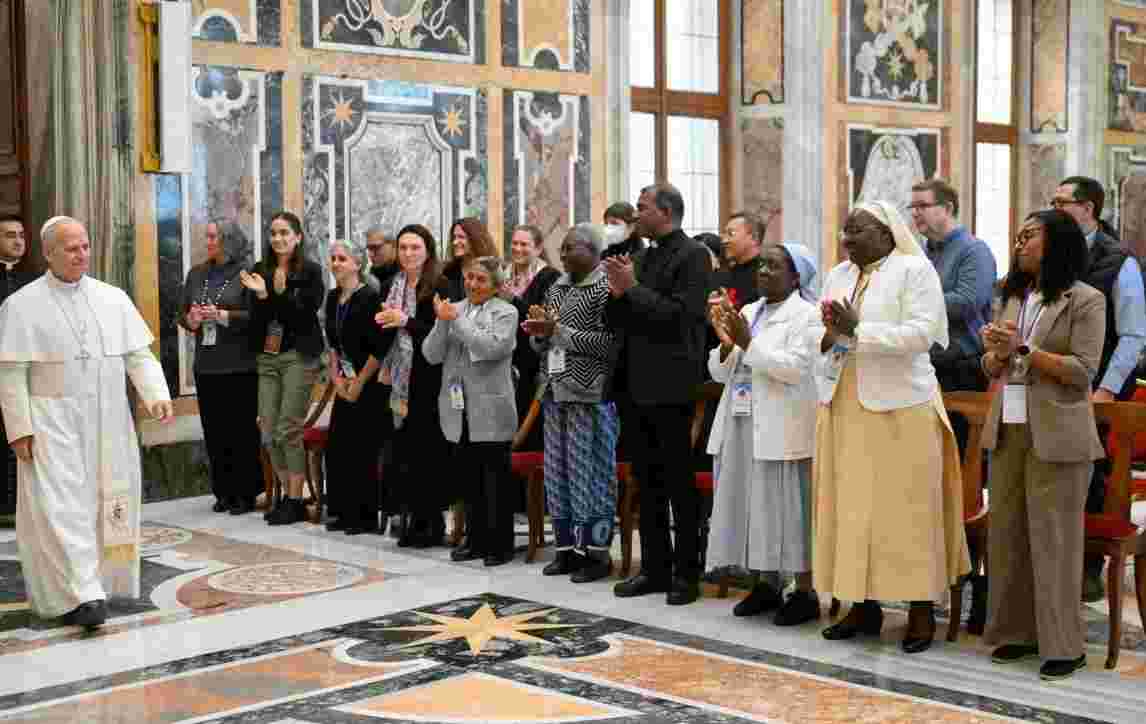
IN A FORMAL audience at the Vatican on Thursday, Pope Leo XIV delivered a substantive address to the Organising Committee of the “From Crisis to Care: Catholic Action for Children” initiative, reiterating the Catholic Church’s unwavering imperative to respect the rights of children and shield them from dangers.
The Pontiff renewed the Church’s call to place the welfare of the world’s youngest and most vulnerable at the centre of international concern, warning that their situation remains profoundly dire despite existing global commitments.
The Pope addressed delegates continuing the work launched at last year’s International Summit on Children’s Rights. The “Catholic Action for Children” initiative itself was born from a response to the urgent appeals of Pope Francis to safeguard children’s dignity and well-being.
It is a collaborative effort co-sponsored by Holy See institutions and major religious unions, with participation from the Pontifical Commission for the Protection of Minors, various religious congregations, and lay experts.
Operating directly with children and families across five continents, the initiative’s ultimate goal is to produce a public action plan. This plan is designed to support Church leaders, communities, and partners in ensuring every child can grow up within safe, nurturing family care, backed by robust and coherent support systems.
Reflecting on the current global landscape, Pope Leo XIV expressed deep concern for the “tragic” realities confronting children. He lamented that those whom “Jesus wanted to come to him” are so often deprived of care and access to life’s basic necessities, with few opportunities to achieve their God-given potential.
He noted with distress that over the past year, the situation has not improved. “It is also of deep concern to learn of the lack of progress in protecting children from danger,” he stated.
Questioning whether the world’s priorities have shifted away from the most vulnerable, the Pope pondered if global sustainable development commitments “have been cast aside,” as evidenced by the multitude of children still enduring extreme poverty, abuse, forced displacement, a lack of education, and separation from their families.
Reaffirming foundational Church teaching on the family, Pope Leo highlighted the child’s “right to receive love from a mother and a father,” noting both are necessary for integral and harmonious development.
Turning to the Committee’s mission, the Pope expressed appreciation for their commitment to developing concrete responses. He outlined two essential points for their work.
First, he reminded them they are “speaking on behalf of those who have no voice,” encouraging perseverance against discouragement or indifference. “Let the good you know you are doing carry you forward,” he urged.
Secondly, he emphasised the need for an integral approach to children’s “transversal needs,” cautioning that a focus limited to a single area risks overlooking others. While acknowledging the diverse specialisations within Church structures, he called for greater harmony and collaboration to ensure children receive “well balanced” care attentive to their “physical, psychological, and spiritual welfare.”
The Pope upheld the support of key Vatican departments and religious unions, calling for the development of “concrete steps and action plans” to meet shared responsibilities.
He concluded by echoing Pope Francis’s core insistence on listening to children themselves, quoting a message from the previous Summit: “Together with you, we want to cleanse the world of bad things, colour it with friendship and respect, and help you build a beautiful future for everyone!”
The audience concluded with a prayer for the Committee and, especially, for suffering children deprived of basic needs.
