


By Iduh Onah
A NEW era began for the Guild of Corporate Online Publishers (GOCOP) as veteran journalist, Danlami Nmodu, mni, assumed its presidency, taking over from Dr. Maureen Chigbo after a keenly contested election.
The transition from Chigbo, publisher of RealNews Magazine, to Nmodu, publisher/Editor-in-Chief of Newsdiaryonline, headlined GOCOP’s 9th Annual Conference, which gathered key political, media, and institutional figures on Thursday, October 9, 2025 to dissect a perennial Nigerian problem: the wide chasm between political campaign promises and the stark realities of governance.

Held at the Radisson Blu Hotel, Ikeja, Lagos, the conference, themed – “Reconciling Campaign Promises with Governance Realities: Challenges and Prospects,” became a platform for urgent calls to action, placing a significant onus on the media to hold power accountable.
A day before kicking off the conversation on tracking campaign promises, GOCOP at the end of its Annual General Meeting (AGM) on October 8, 2025, conducted its biennial election to elect a new national leadership as the Maureen Chigbo-led executive came to the end of its second tenure.

In the election, Nmodu emerged victorious with 63 votes over Segun Adeleye who polled 17 votes.
The other officers, including Deputy President, Olumide Iyanda, General Secretary Sufuyan Ojeifo, Deputy General Secretary, Akeem Oyetunji, Treasurer, Ngozi Onyeakusi, Financial Secretary, Moses Ebosele, and Publicity Secretary, Kemi Yesufu, were returned unopposed.
In his acceptance speech, the President, Nmodu, pledged his commitment to the guild’s ideals. “I take the responsibility of the office seriously. Our members shall come first,” he declared, promising to “work harmoniously with other exco officers and members to take GOCOP to a higher level” and create more human capital and business opportunities for all members.
The newly elected officers were sworn in on October 9, at the end of the dialogue on campaign promise in a ceremony chaired by Chief Bode George.
Masari Sets a Four-Point Prescription for Democracy
Setting the tone for the conversation, former Speaker of the House of Representatives and former Governor of Katsina State, Rt. Hon. Aminu Bello Masari, delivered a stark keynote address.
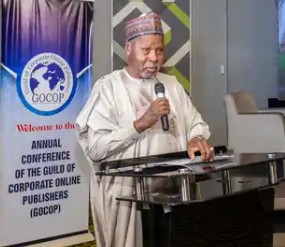
He lamented that “unrealistic pledges made merely to capture the mood of the electorate” have created a “yawning gap” that erodes public trust. He prescribed four critical conditions to bridge this gap:
Responsible Campaigning: He insisted that politicians must make costed, achievable promises based on available resources, challenging the media and civil society to expose unrealistic pledges.
Strong Institutions: Masari identified governance anchored on capable institutions as vital for consistent and transparent policy implementation.
Honest Communication: He tasked leaders to honestly explain trade-offs, delays, and reallocation of resources to the public.
An Informed Citizenry & Media: Citizens and the media, Masari emphasised, must understand governance realities, track promises, and demand transparency instead of chasing sensational headlines for monetary gain.
Masari, who is currently the chairman of the Board of the Tertiary Education Trust Fund (TETFund), cited limited resources, Nigeria’s volatile oil-dependent economy, insecurity, and weak institutions as major obstacles that force governments to reorder priorities, often at the expense of campaign promises.
“Reconciling campaign promises with governance realities is not just about avoiding embarrassment for politicians but about protecting the integrity of democracy itself,” Masari posited, and concluded: “If citizens repeatedly see promises made and broken, they lose faith in the system.”
A Charge to the Fourth Estate: Clear the Clutter
Echoing the theme of media responsibility, PDP chieftain, Chief Bode George, charged GOCOP members to lead the charge in clearing journalism of the “menace of fake news and unprofessional conduct among impostors.”
Commending GOCOP for promoting professionalism and integrity in the digital space, Chief George also warned against calls for military intervention, stating that such calls are capable of truncating democratic progress.
He called for a comprehensive review of the Independent National Electoral Commission (INEC) to strengthen democratic institutions and restore public faith in elections.
Govt Support for Media Marginal, Need to Sustain Social Media Vigilance
From the media perspective, Muskilu Mojeed, Co-founder and Editor-in-Chief of Premium Times, highlighted the paradox of the media’s critical role and the government’s lacklustre support.
“The government hardly gives us support. The fact is, everyone needs the media, especially when in power and even more when out of power,” he stated during a panel session.
Mojeed argued that empowering the media is essential for it to effectively serve as society’s watchdog.
Mojeed acknowledged COVID-19 palliatives to some media houses but urged the government to provide more sustained support to strengthen the sector.
Speaking specifically on the Theme of campaign promises in relation to governance realities, Mojeed also decried the poor quality of leadership, stressing that there exist a “clear disconnect between campaign promises and actual delivery.”
For Prof Abigail Ogwezzy-Ndisika, a Mass Communication scholar at the University Lagos and Director of the institution’s Institute of Continuing Education, journalists deserve commendation for promoting accountability.
Prof Ogwezzy-Ndisika while emphasising the role of social media in demanding transparency, tasked the media and Nigerians generally to ensure that the prevailing effort by the elite to tame social media through censorship must be defeated.
Probe the Manifestos, NOA Urges Journalists
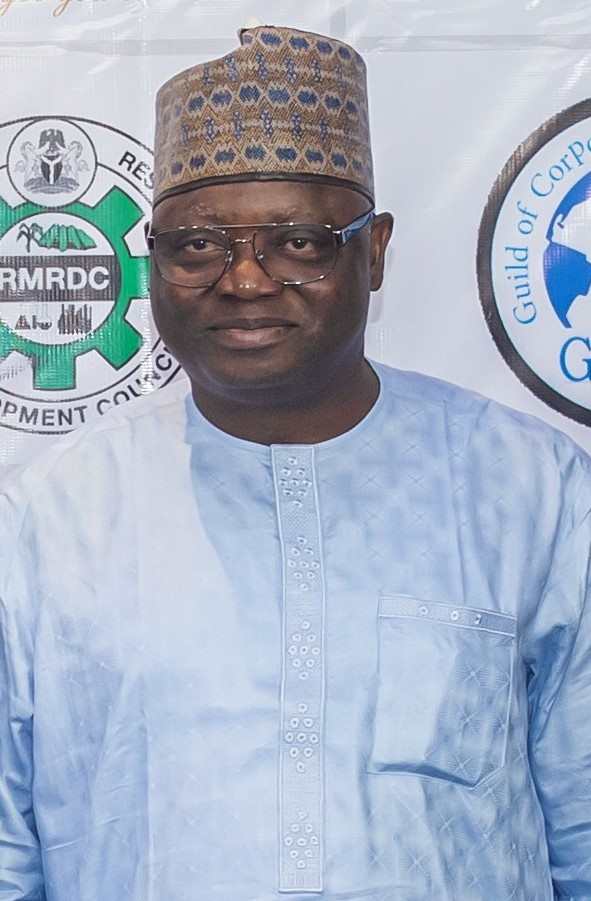
Adding a practical dimension to the media’s role, the Director General of the National Orientation Agency (NOA), Mr Lanre Issa-Onilu, challenged journalists to critically probe the manifestos of aspiring politicians.
“Some people proposed manifestos which are not theirs, but party manifestos. They end up subscribing to their party manifestos. As journalists, we do not question manifestos, but populated airtime for other things,” Issa-Onilu observed.
He urged the media to reshape the country by moving beyond merely broadcasting promises to rigorously interrogating their origins, feasibility, and alignment with a candidate’s actual plans.
RMRDC Charts Path for Economic Value Addition
Beyond politics, the conference also addressed economic diversification. The Raw Materials Research and Development Council (RMRDC) unveiled a new policy framework targeting a minimum of 30% value addition on all exports of local raw materials.
Engr. Obassi Ettu, a Deputy Director at RMRDC, explained that the policy aims to stop Nigeria from losing significant economic value by exporting unprocessed materials.
“Some of these materials can produce three or four end-products, but importers only pay for one. This is why we are insisting that at least 30% of value must be added locally before export,” Ettu said.
He revealed RMRDC’s focus on applied, commercialised research and development, including international partnerships with China for capacity building and developing new crop varieties.
As the conference concluded, the consensus was clear: reconciling political promises with governance deliverables requires a multi-stakeholder approach.
For the newly inaugurated GOCOP leadership and its members, the mandate is to leverage their platform not just to report the news, but to actively shape a more accountable political culture – transforming hope into tangible progress for Nigeria’s democracy.
