


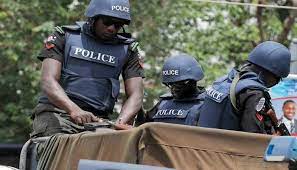
NIGERIA’s centralised policing architecture, long defended by politicians who prefer the comfort of uniformity, has catastrophically failed to stem the rising tide of insecurity. With kidnappers, bandits and insurgents exploiting jurisdictional gaps, it’s past time to recognise that policing anchored solely in Abuja cannot safeguard a nation as geographically, culturally and politically diverse as Nigeria. The moment for state police is not just near, it is now.
Policing in Nigeria was not always centralised. Prior to the military coup in 1966, regional police forces existed; governors wielded significant authority over security in their territories. That changed abruptly when the first military regime abolished regional police and consolidated all powers into a federal force. Since then, successive governments have maintained this structure – even though it clashes with the core principles of Nigeria’s federalism.
Any concerns about governor-led abuse are valid – but they are not insurmountable. Independent oversight mechanisms, legislative constraints and federal coordination can be built into the system. After all, federations like the United States and India manage multi-layered policing systems amidst diverse, sometimes fractious, internal politics.
Yet even decades later, some past leaders have acknowledged the system’s shortcomings. Former President Olusegun Obasanjo, in a 2022 comment, asserted that “state police would be a better option than community policing” and that “the time has come when we should talk of state police and allow it to be.”
ALSO READ: The North-West’s Question: Unfixability And Consequences; By Aminu Habibu Jahun
He cited the example of Colombia, which reverted from centralised to state-level policing, questioning, “Why can’t we do that?” Obasanjo’s point is clear: when centralised policing fails – delayed response, stretched resources – the solution is localisation. But Nigeria did not respond.
Indeed, upon his return to civilian power in 1999, Obasanjo formed a Presidential Committee to review the 1999 Constitution, which submitted recommendations in February 2001. A mix of eminent Nigerians – including Chief Ayo Adebanjo, Barrister Adeniyi Akintola, and others – reviewed the constitution but did not recommend the creation of state police.
Even Obasanjo’s subsequent commentary on state police triggered pushback. The presidency countered his remarks by accusing him of failing to act when he had the power, arguing that he “lacks the right to demand state police.”
ALSO READ: Banditry, Its Politics And Practitioners; By Owei Lakemfa
Former President Goodluck Jonathan, in contrast, has been clear: “We don’t need to debate whether we should have state police or not … there is no way to manage our internal security if the states do not have their police,” he asserted at a national dialogue on state police in April 2024. “We must not waste our time debating whether we should have state police or not,” he added.
At the same event, the Inspector General of Police pushed back, saying “Nigeria is not ready for a decentralised police force” and warning of “conflict of jurisdiction” and likely abuse by governors.
The legislative branch has begun to formalise the debate. In the Senate, a bill was first introduced by Ike Ekweremadu in June 2018 to establish federal and state police structures, including service commissions at both levels. Although it did not pass, the bill marked a significant step.
ALSO READ: Monthly Focus: Service – The Pathway To Greatness; By Pastor Favour Abu Onoja
A renewed push came with HB. 617, officially titled “A Bill for an Act to Alter the Constitution of the Federal Republic of Nigeria, 1999 to Provide for Establishment of State Police and Related Matters.” The bill was introduced in the House of Representatives on November 7, 2023, co-sponsored by legislators from all six geopolitical zones. It proposes deleting Section 214 and replacing it with provisions recognising both Federal Police and State Police, with clear frameworks for structure, oversight and coordination.
HB. 617 is a legislative opportunity, currently before the House. Its passage would not solve all security problems overnight – but it would mark a decisive shift toward a system that empowers states to protect their people. Delay is not a defensible policy – it’s a death sentence for countless communities.
By February 20, 2024, HB. 617 passed its second reading in the House – a critical milestone. Deputy Speaker Benjamin Kalu emphasised that states hot-button security challenges demand urgent reform. Commenting on the bill, Babajimi Benson noted: “Considering our vast population of over 200 million and a police workforce of less than 400,000, the creation of State Police is imperative for addressing Nigeria’s internal security concerns.”
The Independent newspaper reflected on the bill’s delay, lamenting the “gargantuan socio-economic losses occasioned by its unwarranted delay” while welcoming the bill’s introduction and its comprehensive provisions.
This history makes one thing painfully clear: Nigeria’s security void is not new. Leaders across administrations have acknowledged the need for localised policing, from Obasanjo to Jonathan. Yet, political inertia, fear of abuse and constitutional rigidity have stifled progress. In the meantime, Nigerians continue to die.
ALSO READ: Solomon Arase And The Imperative Of Police Reform In Nigeria; By Jibrin Ibrahim
Any concerns about governor-led abuse are valid – but they are not insurmountable. Independent oversight mechanisms, legislative constraints and federal coordination can be built into the system. After all, federations like the United States and India manage multi-layered policing systems amidst diverse, sometimes fractious, internal politics.
Abandoning state police because of potential political misuse is akin to refusing medical treatment because of possible side effects. Nigeria can – and must – create robust guardrails while moving forward.
Nigeria’s insecurity is local and so must be the policing response. If Abuja continues to hoard control, the crisis will only worsen. State police is not just an option or just another security reform; it is Nigeria’s last, best hope for restoring peace to its streets – and relevance to its federal values.
The Nigerian State today is failing its people not because the constitution forbids change but because the political will to enact it has been weak. Scholars like Ufuoma Veronica Awhefeada and Jenigho Phillip Esavwede have described the creation of state police as “imperative for the Nigerian state,” arguing that the 1999 Constitution is overdue for reform. To keep pretending that the existing system can work is not only naïve, it is dangerous.
Those who argue for delay are essentially saying Nigerians must continue to die while politicians debate.
ALSO READ: Nigeria Borrowing Her Way Into Deeper Economic Crisis; By Abadom Lawrence Amechi
The truth is stark: Farmers cannot farm freely. Students cannot study without fear. Communities live under the siege of bandits and terrorists; whole towns are deserted and ransom payments cripple families. All around, the security apparatus is being outsmarted, outpaced and overwhelmed. The reaction from Abuja has not been adequate and in real time, the system continues to fail.
If the president himself concedes that “I have to create state police… we’ll defeat insecurity,” it’s a tacit admission that central control has failed – and that failure has come at the expense of human life.
HB. 617 is a legislative opportunity, currently before the House. Its passage would not solve all security problems overnight – but it would mark a decisive shift toward a system that empowers states to protect their people. Delay is not a defensible policy – it’s a death sentence for countless communities.
Nigeria’s insecurity is local and so must be the policing response. If Abuja continues to hoard control, the crisis will only worsen. State police is not just an option or just another security reform; it is Nigeria’s last, best hope for restoring peace to its streets – and relevance to its federal values.
Abuh, currently doing his mandatory National Youth Service Corps (NYSC), writes from Abuja.
