


FROM all available records (oral, traditional and written narratives), Edumoga and the peoples of the Middle Belt are members of the Kwararafa family; people who came from Yemen in the Arabian Peninsula through Western Sudan between 350AD–360AD and settled in Egypt (Khemmet) for 229 years.
By 579AD, the year Prophet Mohammed was born (about 1,444 years ago), the Kwararafa people left Egypt and came into Nigeria along with the Kanuris and settled in Ngazargarmu (in the present Yobe State) and Kanem Bornu, under the Kingship of Mai Ali.
Between 360AD–841AD, the Arabs from Southern Europe invaded Egypt and drove everybody away including the Kwararafa people, who then journeyed Southwards, with some settling in Nigeria (Ngazargarmu), others in Angola, Cameroon, Cote d’Ivoire, and Ghana (the Gaa, note that Ghanaians bear the name Atta, and they have a traditional ruler called Atta); some went back to Sudan and Yemen (note that in Yemen, we have Atta-Turk and Atta-Gala to date).
The Kwararafa people occupy the valleys of the two major Rivers (Rivers Benue and Niger) in the Map and Coat of Arms of Nigeria. The Kwararafa people are the first Nigerian peoples, the indigenous Nigerian peoples.
Some others settled in the North East of Egypt, with some settling in Congo (the Lingala, note here, that the Tivs came into the Kwararafa territories from Congo, but lately, in the 17th and 18th centuries). others settled at Ethiopia, now split into Eritrea and Ethiopia (about 75% Ethiopian population are Galas).
The Kwararafa people spent 17 years in Ngazargarmu. From Ngazargarmu, they left the Kanuris and the Shuwa-Arabs and moved southwards to a place called BiePie (Apa), which was established by Chief Awudu in 596AD. The Kanuris and the Shuwa-Arabs moved to the Upper East and founded the Kanem-Bornu Empire around 700AD, while the Kwararafa people moved into the Middle Belt (Central Nigeria), settling along River Benue, and they were in total control of the Benue basin and the entire Central Nigeria.
The Kwararafa people spent 1000 years in BiePie, (Apa) up to 1596, and the last King of the Empire was Agbukenjo who had five (5) children, Abe and Ate (twins), then Katakpa, Agwabi, and Kutuka. The children of Abe and Ate are the Jukun Pindiga, Gwana, Kona and Dampar. The children of Katakpa, Agwabi and Kutuka are Koro, Jukun, Igala, Idoma, Alago, Geomai, Nupe and Igbira.
From BiePie (Apa), the descendants of Agbukenjo began to split, with the majority moving southwards, settling in Wukari (Bei-Uka, Kona) for 322 years up to 1918; Muri Province (Wukari, Kona) for 9 years up to 1927 and Benue Province (the Benue valley) for 40 years up to 1967.
The present Wukari Town was established in 1596, and has existed for 427 years as at year 2023, and 24 Kings have ruled in the Kingdom, including His Royal Majesty, the 24th Supreme Majesty and Supreme Leader of Kwararafa Empire, the late Dr. Shekarau Angyu (CON), Masa-Ibi, Kuvyo II), the Aku Uka of Wukari, who journeyed to Puje on the 9th October, 2021, from where he journeyed to Nando through Azi to finally join his ancestors.
As they began to spread from BiePie, some moved north-westwards to Kano (Koro, Kutumbawa, Warja, Warjama, Yakasai, Sengagi, Bichi, Gwaran); Sokoto (Jukun Warno, Gobir); others to Kaduna (Kanikon, Kagoro, Kachia, Koro, Nenzim, Nupe, Jukun, etc.); some to Kebbi (Zuru land, Jukun-Warno, etc.), some to Zamfara (Gobir), others went north-eastwards to Gombe (Jukun-Pindiga, Panda, Tera, Butawa), Bauchi (Sayawa, Panda, Tera, Butawa, etc.); some went back to Yobe (Karekare, Bulewa, Ngizim, Bandawa, etc. in the Gongola Valley and others to the Savannah area in Yobe (Karekare, Bulewa, Ngizim, Bandawa, etc.) and Mandala Highlands.
Some others moved further southwards, settling in Northern Edo (the Afemai and Igara), the Okposi and Afikpo in Ebonyi State, the Arochukwu (Abiriba) in Abia State, the Onu-Agu, Igala and Ette in Enugu State, the Bekwara, Iyala, Obanliku, Ogoja, etc. in Cross River State, the Igalas in Delta State and the Igbirra (Ebirra) in Northern Ondo State in the Southwest. Others settled in Idah, Kogi State (Igala, Egbirra, Igbira, Nupe, Kakanda, Ogori, Bassa-Nkomo,Bassa-Nge; and some settled in Bida (Nupe, Nupawa) and Minna, occupying the River Niger Basin and constituting the River Niger’s riparian population. The intention was to get to the Atlantic Ocean.
Some members of the Kwararafa Empire in Nigeria moved further north-eastwards, settling in Kukawa (Maiduguri) for 316 years, up to 1813; Adamawa Province (Kona) for 40 years up to 1967; Maiduguri for 210 years, up to 2023. Some moved further northwards to Katsina and Jigawa states. It was Bagauda who established Kano 999 years ago with 56 Kings. Fika was also established by Mai Ali 1,164 years ago as at 2023. The Kwararafa people settled and have being in Nigeria for 1,444 years, from 579AD to 2023.
The Kwararafa people occupy the valleys of the two major Rivers (Rivers Benue and Niger) in the Map and Coat of Arms of Nigeria. The Kwararafa people are the first Nigerian peoples, the indigenous Nigerian peoples.
The occupants of the Rivers Benue and Niger valleys and their riparian populations are all peoples of Kwararafa extraction. They are the Jukuns, the Igalas, the Idomas, the Koros (Mighili), the Alagos, the Geomai, Tarok, the Etulos, the Nupe, the Igbira, Egbirra, Kanikon, Kachia, Kagoro, Panshin, Kwande, Ogori, Borgu and New-Bussa. Others are the Karekare, Panda, Kakanda, Arochuckwu, Abiriba, Iyala, Gbagi, Aho (Afo), Dama, Adi, Kuteb, Nyifo, Ebirra, Bondawa, Demsa, Kilba, Bokkos, Ham, Wase, Assakio, Mada, Eggon, Onu-Agu, Ette, Bekwara, Bette, Obanliku, Ukele, Afikpo, Okposi, Afenmai, Igaras, Asaba, Langtang, Jere, Katagum, Misau, Gwantu, Mavo, Kamberi, Kadarko, Hong, Pindiga, Shelleng, Yakasai, Lafiagi, etc. Our friends and allies are the Itsekiris, Berom, Benins, Yorubas, Kanuris and Chambas, and the Tivs live among us.
History has it that the Afo [Aho], Etulos, Koros, Idomas, Igalas, Iyalas, Nupes, Gbagyi (Gwari) Goemais and Jukuns have the same ancestry.
Edumoga History
When Kano was captured by the Kwararafa people during the wars of conquest in the olden days (1600–1671], Gwamaja, an ancient city in Kano, was the home of the present Edumoga people. This is the origin of the song “Ugbamaja oyi’je’ola’danu (meaning: “Gwamaja, a child must know his/her father’s land/home). When the Hausas were liberated by the Arabs, Edumoga along with other warriors (Apa-Jukun) came back to Apa (BiePie Wukari) singing that song, that they were returning home.
It was while in Abinsi that Ode(y) went hunting and discovered salt at Okpoma. Ode(y) then moved there to form the present day Iyalla, Ogoja, Bekwara, Obanliko, etc. in Cross River State. So, Ode(y) did not reach Okokolo in Otukpo. Other brothers of Edumoga swam across River Benue to form the present day Alago, Keana and Doma communities in the present Nasarawa State.
While in Apa, the throne of Aku Uka was to be rotated among the Kwararafa brothers (Koro, Jukun, Igala, Idoma, Geomai, etc.), but each time it was the turn of an Igala or Idoma, Koro, etc., the person to become the King (Aku Uka), will not return from the Nando forest which he must have to cross River Bantaje to visit as part of the preparations, before returning home to be crowned as the Aku Uka. It was only the Jukuns that could cross the river, visit the forest, do the necessary rituals and return home successfully to be crowned the Aku Uka.
So, the Igalas, the Idomas and all their other brothers left Apa and moved on various adventures, with Edeh (Edumoga) and his brothers Ode(y) (Iyala’achi), their friend Abba (Igede), Okpeh (Okpoga) and Ago (Agi’la) settling briefly at Abinsi near Makurdi, while the Etulos settled around Yandev. Okpeh and Ago had the same mother. It was while in Abinsi that Ode(y) went hunting and discovered salt at Okpoma. Ode(y) then moved there to form the present day Iyalla, Ogoja, Bekwara, Obanliko, etc. in Cross River State. So, Ode(y) did not reach Okokolo in Otukpo. Other brothers of Edumoga swam across River Benue to form the present day Alago, Keana and Doma communities in the present Nasarawa State.
From Abinsi, Edumoga and the Igalas fought many wars of conquest up to Auchi, Asaba, (Midwest) and Onitsha in the present Anambra State. They finally settled in Idah, but the Igalas attempted to treat the Idomas as second class citizens. An Edumoga man killed an elephant and the Igala brother demanded for the tusk as his senior. He refused to give him the elephant tusk, and in anger, he left Idah and first settled in Eguma (Ankpa) in the 18th century. Remember Edumoga’Eguma. Then Edumoga moved again to Ikobi (Ikobi Anugba). His departure from Idah triggered a mass movement of all his brothers from Igala land, with some remaining at Igume, Oyiji, etc. From Ikobi, Edumoga, along with Oglewu and his friend, Abba (Igede), came to Okoklo in the present day Otukpo Town. Edumoga later moved across River Okpokwu to occupy their present location, while Oglewu spread from Okoklo to form the riparian population on the northern side of River Okpokwu, remaining as Edumoga’s neighbours.
This was the place where a chicken wing caused the break up between Edumoga and his friend Abba (Igede). The arrangement was that the hand of any animal (wing in case of chicken) sacrificed to the “personal god” (owo’o) by one group (Edumoga or Igede) must be given to the other group. Note that Edeh’s brother, Ode(y) had left to Iyala. Then there was a particular occasion when Edumoga sacrificed a chicken to his personal owo’o and refused to give the wing to Abba (Igede). This caused a very serious disagreement between him and Abba (Igede). Then Abba left the place in anger and moved eastwards settling in Oju and Obi.
This separation pains Edumoga so much that up till date, when an elderly Edumoga man dies and he is being buried, a traditional whistle (O’chu) is sounded with the message: “Aga’nyo, a’da Abbah, Och’Igede k’ikwu la’alo n’mo me’me’o, ge’wa’oo”, (meaning: “when you go, tell Abbah, the Chief of Igede that death has finished us o!!, and that he should come oo!”)
So, it is misleading to tell the younger generation for an adult Igede person to falsely claim that Igedes are not Idomas. In fact, the late Ajene Okpabi, Och’Idoma II, after Ogli Okoh, became Och’Idoma as an Ekeh (Edumoga) indigene. Ekeh is the son of Agbo, who is the eldest son of Ogah, a descendant son of Edeh (Ede’no’moga = Edumoga).
The new Chieftaincy law of Benue State seems to have introduced some conflict in our traditional setting. Government’s intention may not be exactly what the new chieftaincy law brought upon the people, but people who were once their brother’s keepers and lived together very peacefully, that could not sleep when a brother had a problem, have suddenly become enemies and threats to each other. This decay began gradually decades back, but it is getting gradually worse as the time passes.
Idoma gave birth to many children, one of whom is Edeh, the founder of Edumoga (Edeh no’mo’oga) (Edeh, who begot Ogah). Ogah gave birth to Agbo and Abbah. Abbah gave birth to Onah (Onakpata), Okoh and Adatanwata, while Agbo gave birth to Ekeh. Onah (Onakpata) begot Ai’Abbah Ehaje, (Oladegbo, Olaidu, Ojigo, Opialu, Amuhu, Ogomotu, Ojapo and Akpoga). Okoh begot Akpo’odo and Adatanwata begot Abbah Ehicho (Amejo and Okonobo). Amejo gave birth to Ogbodo, Opidlo, Ogene, Ichakwu, Ijege and Olanyega. Okonobo gave birth to Iwewe, Okpafie, and Eboya.
Agbo gave birth to Ekeh (Edeh, Odeh and Abbah). Edeh gave birth to Omlokpo and Obutu. Ekenobi’s mother, Inaba is Omlokpo’s daughter married to Agbaja, the father of Ekenobi, who came in from Oyiji in search of his kinsman, Ekeh. Ekeh was then late (gone hunting), so Agbaja sojourned with Omlokpo and later married his daughter, Inaba.
Odeh gave birth to Ogblega and Aokpasu. Abbah gave birth to Etukwu (Olengbecho) and Onyeke (Amuche and Onyilo whose mother was Onojo. Amuche gave birth to Ajide and Onyilo gave birth to Ogblo).
Ugbokolo is a separate unit of Igala descent, from Igume, that has been granted citizenship and incorporated into Edumoga with equal rights to the throne.
Edumoga has six clans in order of seniority Ekeh, Onah (Onakpata, Ai’Abbah Ehaje), Adatanwata (Ai’Abbah Ehicho), Akpo’odo, Ugbooklo and Ingle.
The first Chief of Edumoga was Ikwumonu Okpotu from Olengbecho (Ekeh). The second was Idibia Onoja from Ojigo (Onakpata, AiAbba Ehaje). Idibia Onoja’s reign was very short. He died very early. The third was Agbam Okoh from Akpali, Ugbokolo. The fourth was Aba Ujah from Okpafie (Ai’Abba Icho). Then came Daniel Adulugba (Opialu, Onakpata, Ai’Abbah Ehaje) who was not beaded probably because it was supposed be the turn of Ekeh to restart the circle. Now, Chief S. S. Abah from Omlokpo, Ekeh, is currently on the throne as Ede of Edumoga.
The new Chieftaincy law of Benue State seems to have introduced some conflict in our traditional setting. Government’s intention may not be exactly what the new chieftaincy law brought upon the people, but people who were once their brother’s keepers and lived together very peacefully, that could not sleep when a brother had a problem, have suddenly become enemies and threats to each other. This decay began gradually decades back, but it is getting gradually worse as the time passes.
The new Benue State Chieftaincy law has created what they call 2nd and 3rd class chiefs in parallel to the existing Traditional Council setting. However, the original Edumoga Traditional Council hierarchy, of all beaded chiefs in the territory of Edumoga remains in place to handle all aspects of culture and tradition of Alekwu, Ekwunokwu, Ach’Omuduje, Owo’o opa and Onyo’nkpo, while the 2nd class and 3rd class Chiefs created by government for political or whatever reason, remain government messengers to the people.
People who had sleepless nights awaiting the heralded home coming of kinsmen and women, brothers, sisters, cousins, nephews, uncles, aunties, etc. at Christmas, Easter and school holidays have gradually abandoned the relationships due to earthly, canal things that are vanity. Once friends, now strangers and enemies, building fences around their houses, even in the village. The elders who should settle quarrels are now divided against each other, and take sides, pitch tents and look the other way while conflict deepens. Who bewitched us in Edumoga?
We have to change the narrative and revert to our natural system of co-existence, else in the nearest future, our children will ask us why we didn’t do anything when there was still time to act. The leaders and the entire political class claim that they love us above all else, yet they are stealing the future of our children right in front of our very eyes. Until we start focusing on what needs to be done rather than what is politically possible, there is no hope.
We cannot solve the crisis without treating it as a crisis. We should not beg the leaders and the political class to care. They have ignored us in the past, and we know they will ignore us again. Let us focus on justice and equity. If the solutions within the present system are so impossible to find, then, we have to change the system itself. We have run out of excuses and we are running out of time. We should let the conflict brewers (the leaders, elders and the political class) know that change is coming, “A New Edumoga is coming, because the real power belongs to the people”.
The new Benue State Chieftaincy law has created what they call 2nd and 3rd class chiefs in parallel to the existing Traditional Council setting. However, the original Edumoga Traditional Council hierarchy, of all beaded chiefs in the territory of Edumoga remains in place to handle all aspects of culture and tradition of Alekwu, Ekwunokwu, Ach’Omuduje, Owo’o opa and Onyo’nkpo, while the 2nd class and 3rd class Chiefs created by government for political or whatever reason, remain government messengers to the people.
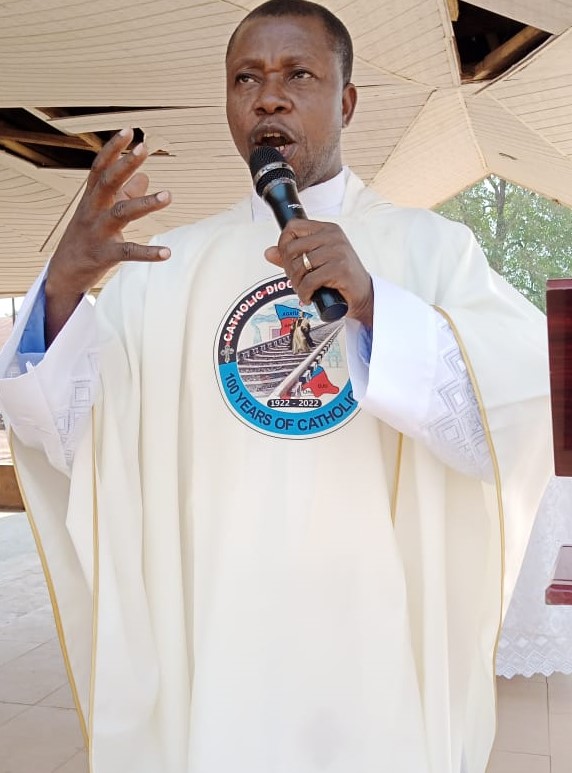
I thank Rev. Fr. Ogah, Oche Emmanuel, the entire members of St. Matthew Catholic Community and elders, opinion leaders and all who are part of the organisation of the centenary celebration for finding me worthy to speak at this epoch-making event.
Being a paper delivered by Prof Ejeikwu Emmanuel Oloja on the occasion of the centenary celebration of Edumoga from 16th-18th November, 2023. Prof Oloja is of the University of Abuja, Nigeria.
