


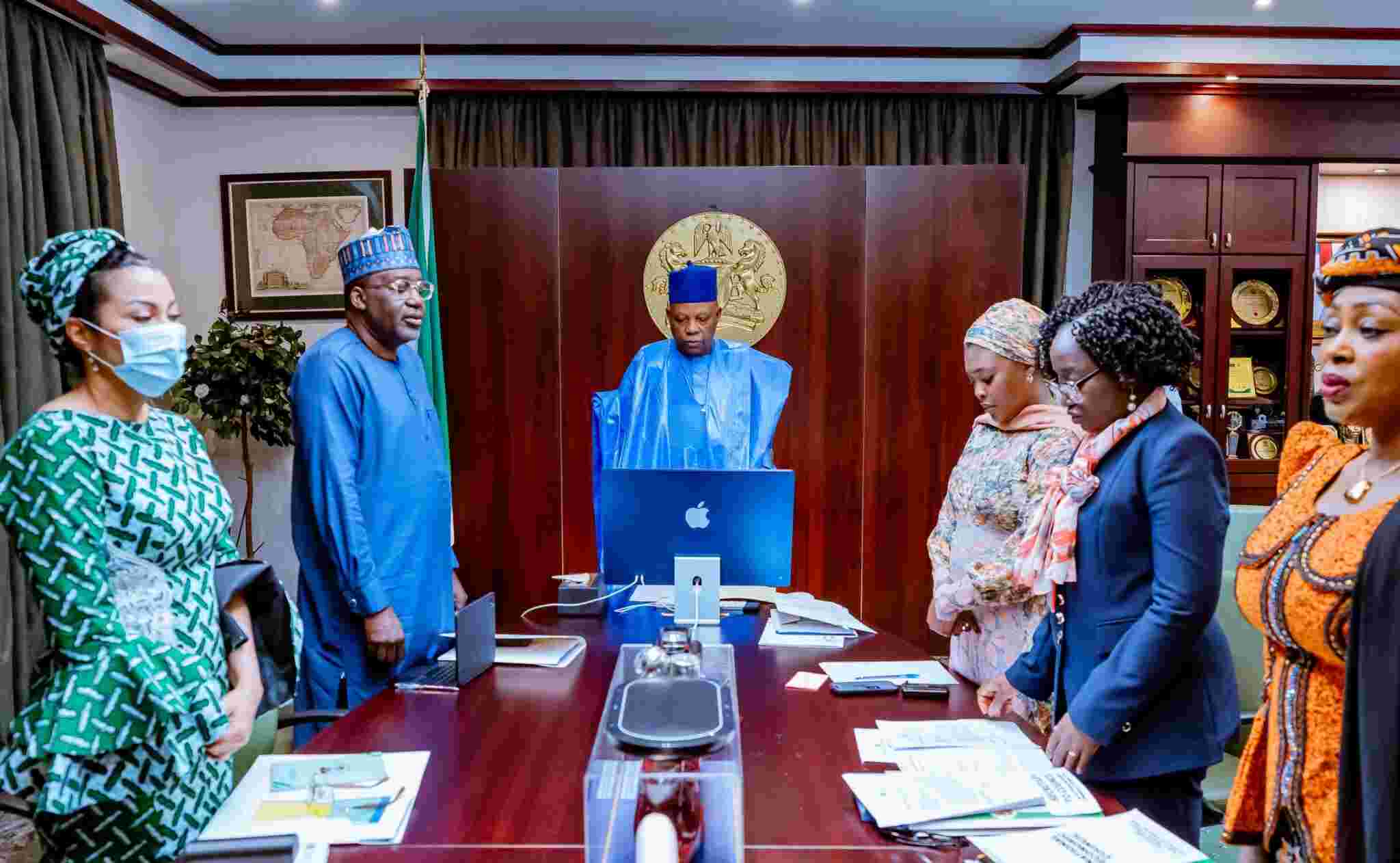
THE NATIONAL Economic Council (NEC), on Thursday endorsed a 90-day economic action plan said to be designed to reduce cost of living, improve food affordability, and attract investment to the country.
The action plan was proposed by the Federal Ministry of Finance to consolidate what is described as gains from President Bola Ahmed Tinubu’s economic reforms. The plan, it is claimed, will accelerate the delivery of projects with direct benefits to Nigerians.
The council’s endorsement followed a presentation by the Minister of Finance and Coordinating Minister of the Economy, Taiwo Oyedele, during its 161st meeting held virtually, and chaired by Vice President Kashim Shettima.

Although full details of the plan is yet to be unveiled, but Vice President Shettima explained that Tinubu’s economic reform programme was designed to achieve broader national prosperity, noting that governments at all levels have a responsibility to translate its objectives into improved living conditions for Nigerians.
Shettima urged governors and relevant government institutions to ensure that the gains of the administration’s economic reforms translate into affordable transportation, improved healthcare, employment opportunities and greater financial security for Nigerians.
The vice president said the success of economic policies must ultimately be measured by their impact on citizens’ daily lives.
He stressed that the responsibility of government extends beyond announcing reforms to building institutions that enable Nigerians to plan their futures with confidence.
“The first dividend of prosperity should be the confidence to plan a life. Our task is to make such confidence less dependent on fortune.
“The council’s deliberations on transportation, healthcare, police reform, and livestock development represent critical decisions about the quality of life Nigerians should expect from economic progress. Our separate jurisdictions must serve a common public interest,” Shettima said.
He emphasised that Nigeria’s federal structure must strengthen cooperation rather than become an obstacle to the delivery of essential services.
On the National Compressed Natural Gas (CNG) Bus Initiative, Shettima underscored the need for state governments to support affordable transportation systems that would reduce the financial burden on commuters.
He maintained that the success of the programme should be determined by affordability and accessibility rather than the number of vehicles deployed.
“The cost of reaching a livelihood should never consume the livelihood itself. The passenger’s experience must guide our ambition, because the value of public transport resides in the journeys it makes possible. We should assess success through affordability and access, rather than fleet size alone,” he said.
The vice president said Tinubu made economic reform the instrument of a larger national ambition. “Our contribution must give that ambition social depth and productive strength,” he stated.
He urged governors to bring their understanding of local realities into national policy decisions.
The vice president insisted that effective implementation requires clear responsibilities and practical agreements among the tiers of government.
“Our separate mandates must not become competing excuses. Each Governor carries knowledge that no federal document can supply,” he said.
Shettima challenged members of the Council to judge every policy proposal by its capacity to reduce uncertainty, create opportunities and strengthen public confidence in government.
Presenting the economic outlook, Oyedele expressed optimism about the progress recorded under the Tinubu administration’s reform programme and the prospects for further economic recovery.
He identified the reduction of headline inflation and interest rates to single digits by 2027 as key policy objectives.
The minister noted that the next phase of reforms would require coordinated implementation across federal and state institutions.
Meanwhile, NEC received an update on the reported Ebola outbreak in the Federal Capital Territory from the Minister of Health and Social Welfare, Prof. Muhammad Pate.
Pate allayed fears of a major public health crisis, assuring members that Nigeria possesses the institutional capacity to contain the situation.
The minister briefed Council on efforts by the ministry, in collaboration with relevant stakeholders, to operationalise a robust national response system.
He identified coordination and governance, detection at points of entry, laboratory testing capacity, logistics for essential kits and personal protective equipment.
Pate acknowledged the efforts of 21 state government that had updated their response plans.
He urged the remaining 15 states to expedite the establishment of appropriate preparedness and response mechanisms. (NAN)
