


- Warns Against ‘Commodification’ Of Human Life
POPE Leo XIV has called for a renewed global commitment to combating hunger, warning that international institutions and governments must place human dignity above political interests, economic calculations and bureaucratic obstacles if they are to address the growing food crisis affecting millions around the world.
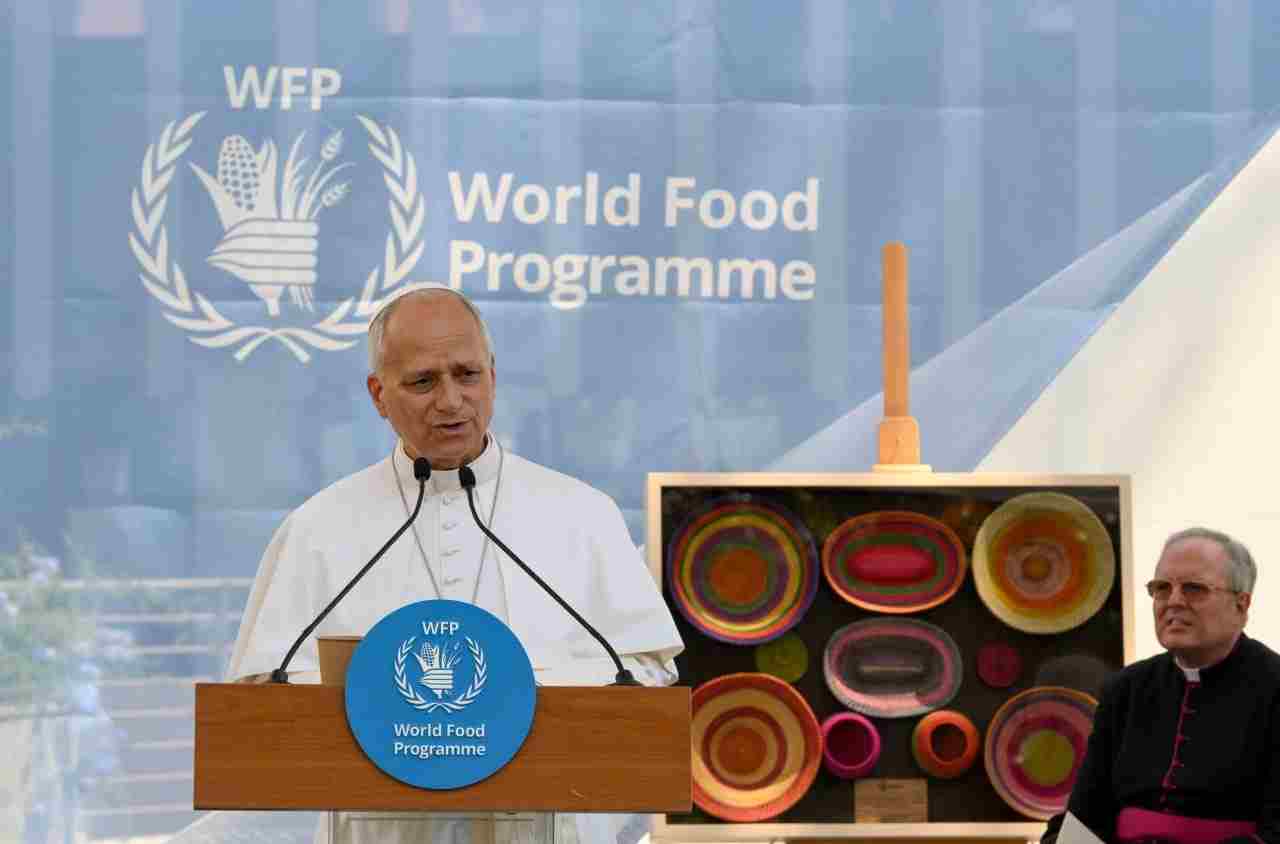
Speaking at the headquarters of the United Nations World Food Programme (WFP) in Rome on Monday, June 22, the pontiff addressed the agency’s Executive Board and appealed for stronger international cooperation, greater investment in food security and a reassessment of the priorities that continue to fuel conflict and deprivation rather than human development.
The Pope praised the WFP’s efforts to save lives during emergencies and provide assistance in areas affected by war and natural disasters, describing the agency as a concrete expression of international solidarity.

He said the organisation’s mission closely aligns with the Catholic Church’s commitment to defending human dignity and promoting fraternity.
Leo XIV argued that today’s humanitarian crises can no longer be viewed as isolated events. Instead, he said, prolonged conflicts, chronic food insecurity, economic instability and climate-related vulnerabilities have become enduring realities. According to the Pope, the challenge facing the international community is not only how to respond to these crises, but also why global systems continue to generate the very problems they are later forced to address.
The pontiff expressed concern about what he described as the growing fragmentation of the international order and the weakening of multilateral institutions. He warned that mistrust among nations has increasingly shifted attention toward national security concerns and domestic priorities, often at the expense of collective action and global responsibility.
Highlighting what he called a troubling paradox, Leo XIV noted that humanity possesses unprecedented productive capacity while vast populations remain vulnerable to hunger and deprivation. He said humanitarian concerns are too often pushed aside despite widespread recognition of their importance.
The Pope also criticized the increasing bureaucratization of humanitarian assistance, arguing that excessive procedures can delay aid reaching those who need it most. At the same time, he warned against allowing access to essential goods such as food to be influenced by strategic or economic considerations.
“In effect, conflicts are fed more readily than people are nourished,” he said, lamenting what he described as a profound imbalance in political and moral priorities.
Leo XIV stressed that hunger is not merely a humanitarian issue but one that affects social stability, migration patterns and long-term development. Food insecurity, he said, weakens institutions, undermines education and economic growth, and contributes to cycles of fragility that eventually impact the entire international community.
Calling for a renewed commitment to multilateral cooperation, the Pope insisted that no nation can confront global challenges alone. Lasting peace and sustainable development, he argued, can only be achieved through genuine international dialogue and coordinated action directed toward the common good.
He urged governments and citizens worldwide to increase resources devoted to fighting hunger and addressing its root causes. He also appealed for the removal of obstacles that prevent aid from reaching vulnerable populations and encouraged closer collaboration between international agencies, civil society organizations and faith-based groups.
The Catholic Church, through its parishes, dioceses and charitable networks, often reaches communities that are inaccessible to international actors, the Pope noted, encouraging the WFP to continue supporting such partnerships.
A central theme of the address was the conviction that food, water and healthcare should never be treated as commodities subject solely to market forces or geopolitical calculations. Leo XIV described access to adequate food as a fundamental human right rooted in the inherent dignity of every person.
He commended the World Food Programme for complementing emergency relief efforts with long-term initiatives, including school feeding programmes, which he said strengthen education, resilience and human development while offering hope for future generations.
Following his formal address, the Pope held a virtual conversation with WFP representatives serving in various regions around the world. During the exchange, he highlighted the cyclical relationship between hunger and conflict, observing that hunger often contributes to instability while conflict, in turn, deepens food insecurity.
“The world today could live without hunger,” he said, arguing that sufficient resources and food production capacity already exist. However, he lamented that resources are too frequently directed toward war and conflict rather than addressing basic human needs.
Later, in brief remarks delivered to WFP staff gathered outside the headquarters, Leo XIV praised workers who risk their lives in some of the world’s most dangerous environments to ensure food reaches vulnerable populations.
Reflecting on the values represented by the organization, he singled out the ideas of “community” and “hope” as essential to the mission of fighting hunger. In a world marked by division, polarization and conflict, he said, humanitarian workers help build unity and provide tangible hope for a more just and peaceful future.
Concluding his visit, the Pope assured WFP personnel of his prayers and gratitude, saying their work not only provides food to those in need but also helps nourish hope for a better world.
