


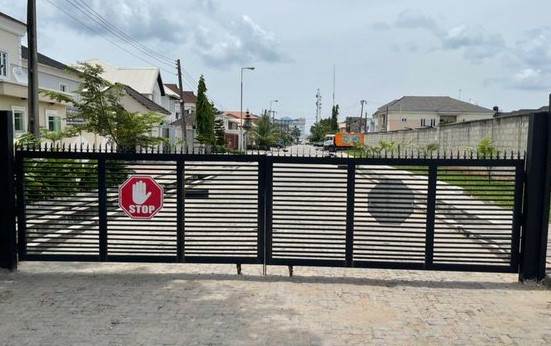
RISING insecurity and limited police presence have driven residents of the Federal Capital Territory (FCT), to adopt costly self-help measures, like installing street gates and hiring private vigilantes.
Residents, who spoke with the News Agency of Nigeria (NAN) Abuja, said that the development aimed to secure their neighbourhoods amid increasing cases of kidnappings and robberies.
They said that before the installation of the gates, communities engaged relevant authorities, who conducted site assessments and mapping before the projects commenced.

Mr Masoyi Sanda, a mechanical engineer, said residents of Hargeysa and Burundi streets in Wuse Zone 5 resorted to installing gates and hiring guards due to rising insecurity.
Sanda said the decision followed repeated incidents of robbery, theft of household items such as waste bins, and reports of illicit drug activities in dark corners of the neighbourhood.
He explained that the idea of installing gates was first proposed about two years ago, but failed due to a lack of collective funding.
According to him, the worsening security situation now forced residents to review the proposal after several robberies and suspicious night time activities.
He added that while the gates remain open during the day to allow free movement, access is controlled at night by security personnel.
Sanda noted that the initiative was funded by willing home owners, as not all residents supported the move, adding that some expressed concerns about restricting movement on traditionally public access roads.
He said that the development reflected a growing trend of residents taking responsibility for their security due to gaps in public safety systems.
Similarly, Mr Adebayo Abdulakim, a security officer in Kuchiako Extension, Kuje, said that amid rising crimes, residents were increasingly funding their own security by gating streets and hiring local vigilantes.
Abdulakim said that, faced with gaps in formal policing, neighbourhoods now tax themselves sometimes up to ₦40,000 monthly per area to secure streets against ”one-chance” robberies and kidnappings.
He noted that the decision followed repeated incidents of robbery, theft, and kidnapping.
“After several robberies and suspicious activities around the area, especially at night, some of us agreed that we can no longer wait. That was when the idea was reviewed and implemented,” he said.
Mrs Uzor Emeka, a businesswoman in the Galadima area of the FCT, said the arrangement in her neighbourhood allowed free movement during the day, but restrictions at night to curb criminal activities.
“During the day, the gates remain open to allow normal movement, but at night access is controlled and monitored by security personnel,” she said.
She added that the initiative was funded by willing home owners.
Meanwhile, some residents have expressed concerns about the implications of restricting movement on roads traditionally considered public.
Observers however say the development reflected a growing trend in urban areas where residents increasingly take responsibility for their own security amid perceived gaps in public safety systems. (NAN)
