



By Our Reporter, With Agency Reports
FOLLOWING desperate cries for help echoing from the squalid displacement camps, youths from Agatu West in Agatu LGA of Benue State on Friday poured out in peaceful protest, demanding immediate federal intervention to halt what they describe as a campaign of secret killings, rape, and arson by unidentified attackers ravaging their communities.
Carrying placards and their grief, the protesters, under the aegis of the Agatu West Peace and Unity Forum, declared that their people are living under a siege of silence, with deadly attacks occurring so frequently that they have become a normalised aspect of their life, a situation which often go unreported.

The protest was a raw display of a community pushed to its limits, its young men and women crying out against a backdrop of official indifference they claim has left them to die.
“In the last two years, there have been secret killings of our people which the media do not even get access to report,” lamented Mr. Ebi Lucky, the National Youth President of the forum.
He added: “That is why we are protesting to draw the attention of the Federal Government, especially as our representatives appear to be paying deaf ears to our cries.”
The protesters alleged that farmers tilling their land have become easy targets, young girls are being subjected to rape, and homes are systematically set ablaze, forcing entire villages to flee and leaving once-fertile farmlands desolate.
The protest laid bare a terrifying pattern. Mr. Dandy Adoba, General Secretary of the forum, painted a grim picture of entire communities being sacked. “Hundreds of residents had been killed, while many others were displaced from their homes,” he said, accusing authorities of empty promises.
“We have taken our complaints to the local government authorities several times and were promised that security would be deployed, but nothing has been done. As we speak, our people are dying almost on a daily basis.”
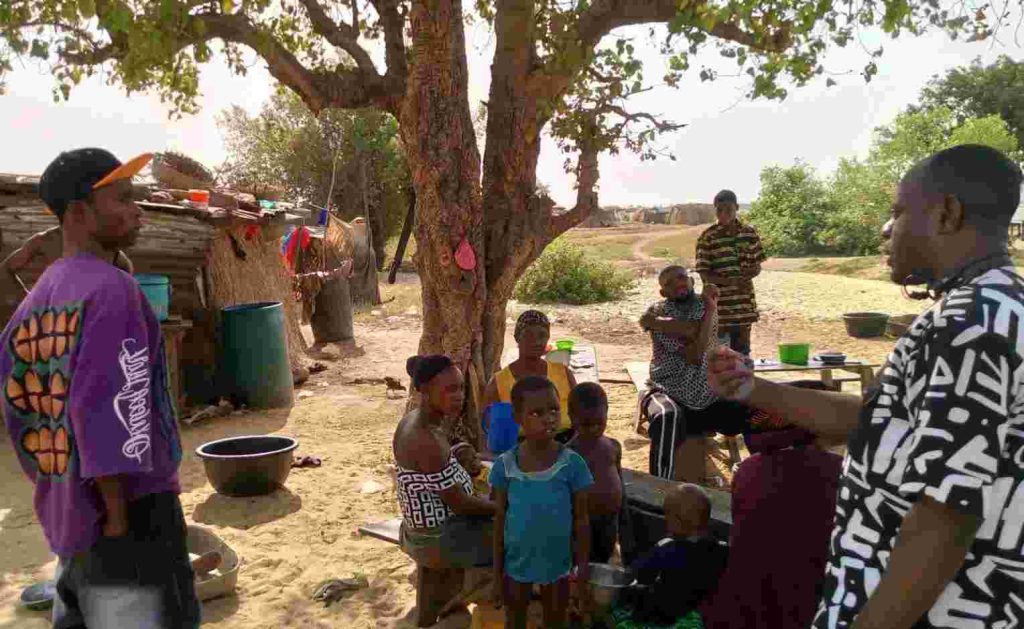
The sense of abandonment was not confined to the protest route. Just a short distance away, at a makeshift camp in the local government area, the human cost of this sustained violence was evidently visible. Here, hundreds of internally displaced persons (IDPs) from Agatu West have been languishing for over two years, their lives on hold as they wait for the peace that will allow them to return to their ancestral homes.

Living in tattered grass shelters beside a river that swells menacingly during rains, the displaced persons – many of them women and children – share the same story of fear and flight, tales of survival on the kindness of strangers, their children out of school, their futures uncertain.
They are trapped between the terror of their abandoned villages and the precarious existence of the camp.
“We came here because soldiers are around and we feel safer,” explained Mrs. Ajumi John, an IDP, her voice laced with the anxiety that defines their nights. “However, sometimes at night we hear information that attackers may come, and we start running to different places to save our lives and our children,” Mrs John added.
Mr. Ogah Sale, another displaced person, echoed the sentiment of bewildered loss: “We found ourselves here because of attacks from people we do not know. We had to leave everything behind.”
The message from both the protesters and the displaced was unified and urgent: the government must act now. They are not asking for handouts, but for the fundamental right to exist in peace. They want security personnel deployed not just to nearby towns, but to the vulnerable communities and the routes used by the attackers. They want to return to their farms, to rebuild their homes, and to fish in their rivers.
Receiving the protesters, the Divisional Police Officer for Agatu, CSP Dennis Asawa, commended their peaceful conduct and assured them that their message will be conveyed to the appropriate authorities.
But for the people of Agatu West, assurances mean nothing but a hollow ritual from the respective authorities in response to the unending bloodbath. As they huddle in a camp or march on the streets, their collective cry is a simple one, voiced by Mr. Ebi Lucky: “All we are asking for is peace in Agatu land so that our people can return home.”
