


By Amos Aar
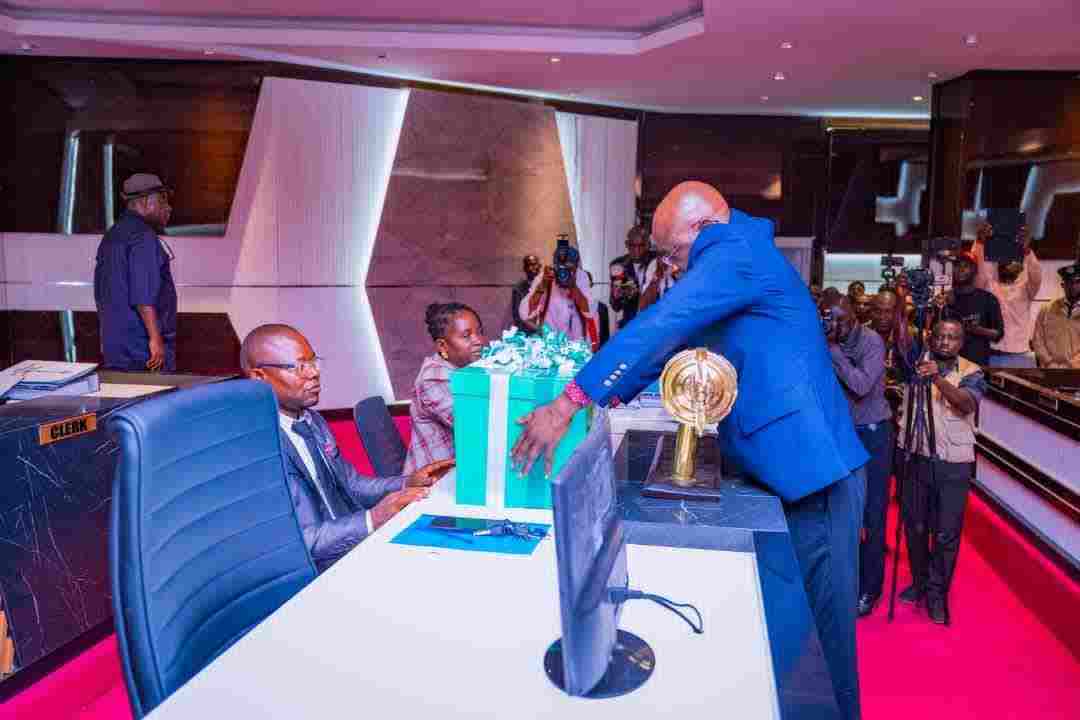
BENUE State Governor, Rev. Fr. Hyacinth Alia, on Monday presented the 2026 Appropriation Bill to the State House of Assembly, proposing a total budget of N605.5 billion, which he said is aimed at accelerating rural development, strengthening livelihoods and sustaining economic growth.
Presenting the estimates at the Assembly Complex in Makurdi, the governor said the spending plan, themed: “Budget of Rural Development, Livelihood Support and Sustained Growth,” is designed to reposition the state’s economy and translate development efforts into improved living conditions for the people.

According to the proposal, N281.09 billion, representing 46.4 per cent of the total budget, is allocated to recurrent expenditure.
Governor Alia explained that the figure reflects an increase of about 21.7 per cent over the revised 2025 recurrent budget and would largely cater for the payment of the new minimum wage, salaries and other overhead obligations.
Capital expenditure is projected at N342.42 billion, underscoring the administration’s emphasis on infrastructure and long-term development. The governor noted that meaningful transformation of the state requires strategic investments, particularly in rural areas where productivity and access to basic services remain critical.
He disclosed that over 30 per cent of the capital budget has been earmarked for rural roads, feeder roads and bridges, adding that the government plans a phased construction and rehabilitation of routes linking farming communities to markets, processing centres, schools and healthcare facilities. He said the intervention would reduce post-harvest losses, lower transportation costs and stimulate local commerce.
Governor Alia further explained that the major pillars of the 2026 budget include sustained growth through investments in education, health, infrastructure, innovation and digital transformation, which collectively account for 55.7 per cent of capital spending. Rural development initiatives, covering agriculture, agro-industrial development, rural electrification, water supply and environmental protection, are allocated 30.23 per cent, while livelihood support programmes such as social protection, MSME expansion and cooperative development will receive 14.11 per cent.
Reviewing the performance of the 2025 fiscal year, the governor acknowledged prevailing economic and security challenges but said the state recorded notable gains across key sectors. He revealed that security coordination was strengthened through the deployment of 5,000 Benue State Civil Protection Guards working alongside federal security agencies and community structures, leading to improved stability in several previously affected areas.
On infrastructure, Governor Alia reported that two underpasses in Makurdi and Gboko are nearing completion, about 50 kilometres of roads have been completed within the state capital, while construction is ongoing on more than 387 kilometres of roads across the state. He said the level of investment has ranked Benue among the top five states nationally in capital expenditure per capita.
The governor also highlighted progress in workers’ welfare, noting that salary arrears inherited by his administration have been reduced from ten months to three, with similar reductions recorded in pension and gratuity backlogs. He said the decision to prioritise workers and retirees was taken despite the pressure on state finances.
In the agricultural sector, Alia outlined key interventions including the revival of the fertiliser blending plant, subsidised farm inputs, the distribution of 150,000 oil palm seedlings under the Benue Alia Palm Project, and a test run of a fruit juice processing factory aimed at reducing post-harvest losses. He added that the Benue Beer project, now nearing completion, is expected to create over 1,000 direct jobs and strengthen linkages with local farmers.
Education, healthcare, digital skills development and youth empowerment also featured prominently in the budget, with allocations for school rehabilitation, teacher recruitment, digital training for civil servants and youths, as well as the upgrade of facilities at the Benue State University Teaching Hospital.
Governor Alia assured lawmakers and residents that his administration would continue to enforce fiscal discipline, block revenue leakages and expand internally generated revenue through automation, without imposing additional burdens on citizens. He expressed confidence that, with legislative support, the 2026 budget would deepen development and expand economic opportunities across the state.
Responding, the Speaker of the Benue State House of Assembly, Hon. Alfred Berger, assured the governor that the legislature would accord the 2026 Appropriation Bill the necessary legislative scrutiny in the interest of transparency, accountability and sustainable development.
He pledged the cooperation of lawmakers to ensure the timely passage of the budget for the benefit of the people.
Earlier, the House passed a vote of confidence on Governor Alia, citing his performance in office, including the renovation of the Assembly Complex and support provided to lawmakers for constituency projects.
“Your Excellency, this Honourable House has passed a vote of confidence on you not because of eye service, but because of what you are doing. For the first time, we are sitting in a befitting chamber. Someone can use this chamber and even post it as National Assembly. All this has been made possible by you,” Berger acknowledged.
