


By Amos Aar
A DEVELOPMENT expert and convener of the Benue Open Governance Society (BOGS), Mr. Sam Agwa, has urged the government to implement urgent reforms in agricultural practices across Benue State to mitigate the effects of climate change.
Speaking at the 2025 Benue Foods and Markets Roundtable on Thursday at the Nigeria Union of Journalists (NUJ) Secretariat in Makurdi, Agwa emphasized the necessity of adopting adaptive strategies in response to the growing impacts of climate change.
He highlighted that environmental degradation, largely driven by human activity, demands immediate action.
Drawing a parallel between human aging and environmental decline, Agwa noted that while some climate changes occur naturally, many are exacerbated by human actions.
“Just as humans age, so does the Earth — partly through natural processes, but significantly due to our activities. The way we drive, consume energy, and deforest land all contribute to environmental stress,” he stated.
Agwa called for the adoption of climate-smart agricultural techniques, including drought-resistant crops and organic fertilizers, warning that current farming methods degrade soil quality and jeopardize future food security. He insisted that only robust government intervention could facilitate an effective transition for farmers.
Citing a study titled; “Benue Sustainable Agriculture: The Solution to End Water Scarcity and Achieve Food Security,” Agwa lamented the poor implementation of Nigeria’s National Climate Change Policy at the state level.
He urged the Benue State Government to prioritize local seed production and establish quarantine zones to prevent the spread of diseased crops, such as cassava stems.
Additionally, he proposed that each local government area in Benue commit to planting between 100,000 and 200,000 trees annually under the World Bank-funded ACRESAL program, starting in 2025.
“Tree planting is one of the most tangible actions we can take to safeguard our environment,” he stressed.
Agwa also appealed to the administration of Governor Hyacinth Alia to ensure that 80% of this season’s crops are cultivated using certified, climate-resilient seeds.
“While we appreciate fertilizer subsidies, addressing climate change requires more comprehensive measures,” he added.
In his welcome address, Mr. Terwase Achussah, CEO of Benue Foods and Markets, recounted the roundtable’s origins, which began in 2021 and was formally established in 2023.
He noted that the event aims to address food security and productivity challenges while introducing the “Eat Right” campaign to promote healthier dietary habits among residents.
The Managing Director of the Benue State Agriculture Development Company (ADC), Mr. Donald Aorkwagh Akule, cautioned against unsustainable lifestyles that worsen climate change.
He expressed concern over deforestation, loss of traditional building materials, and soil exposure due to urbanization.
“Our ancestors lived sustainably without modern excesses. Today, our choices are harming both the environment and our well-being,” Akule remarked, pledging ADC’s support for community afforestation efforts.
Mr. Terna Umah, Deputy Manager of News at NTA, underscored the need for increased funding and favorable agricultural policies. He identified irrigation, livestock management, and policy reinforcement as critical areas for government intervention to counteract drought and climate-related food shortages.
In goodwill messages, NUJ Benue State Chairman, Comrade Bemdoo Ugber, and ICT expert, Jeff Udende praised the initiative, acknowledging climate change as a severe threat to agriculture and expressing hope that the roundtable would yield practical solutions.
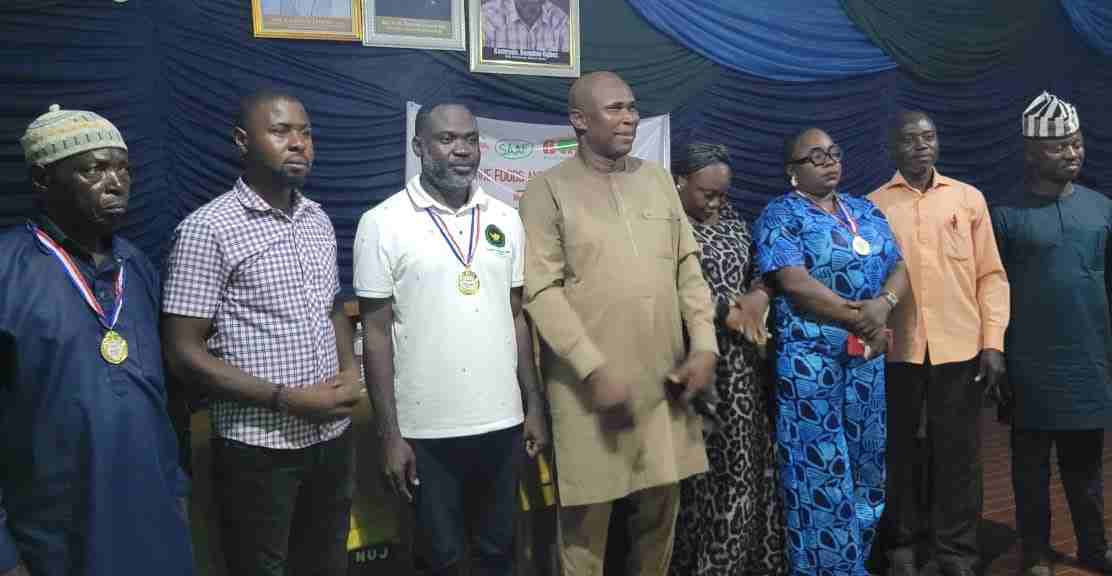
The event concluded with the presentation of Special Recognition Medals to individuals who have contributed significantly to food security in Benue. Honorees included Sir Alex Adingi, Special Adviser to the Governor on International Investments; Mr. Donald Aorkwagh Akule of ADC; Mr. Terseer Aõndosoo of Bencut Chemicals and Fertilizer; Mr. Akpaaku Dzer, developer of the Akpaaku yam species; and Radio Benue journalist Patrick Omora, among others.
