


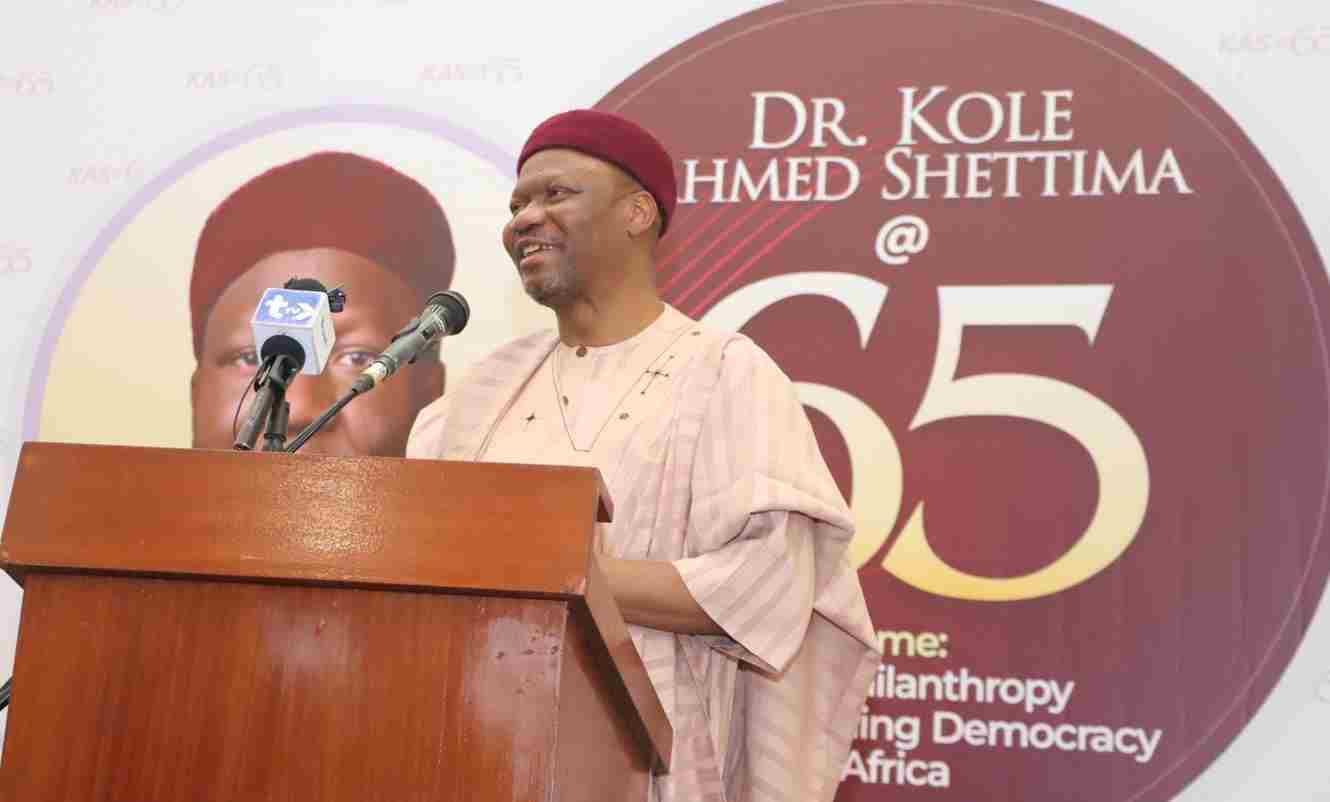
By Iduh Onah
THE FIRST inkling of the ‘conspiracy’ to ‘embarrass Dr Kole Ahmed Shettima (KAS) on his birthday anniversary became public via an article by online publisher, activist and public intellectual, Adagbo Onoja, in his medium, Intervention.
In the article, in his characteristically catchy and dramatic style of captioning and introduction, Onoja arguably broke the news of the birthday conspiracy by friends of Shettima who over time covertly planned a symposium to mark his 65th birthday without his knowledge.


While Onoja began his article with an exciting disclosure of the event, he however put readers in suspense by withholding details and instead embarked on a short discursive analysis until later when he again broke the news that the man who is to be celebrated had not been informed of the ‘plot’ 48 hours prior to the symposium. He noted that as a result, Shettima may perhaps be air-bound, heading somewhere at the time the event was kicking off at Yar’Adua Centre, Abuja.
Though Onoja was sketchy on details of the plot, however, Y. Z. Ya’u’s welcome remarks, iced by Dr Shettima himself in his vote of thanks, last Wednesday at the symposium, offered not only a perfect raison d’etre for the ‘embarrassment conspiracy’, but even more an intellectually objective acknowledgement of Shettima’s persona and world view.
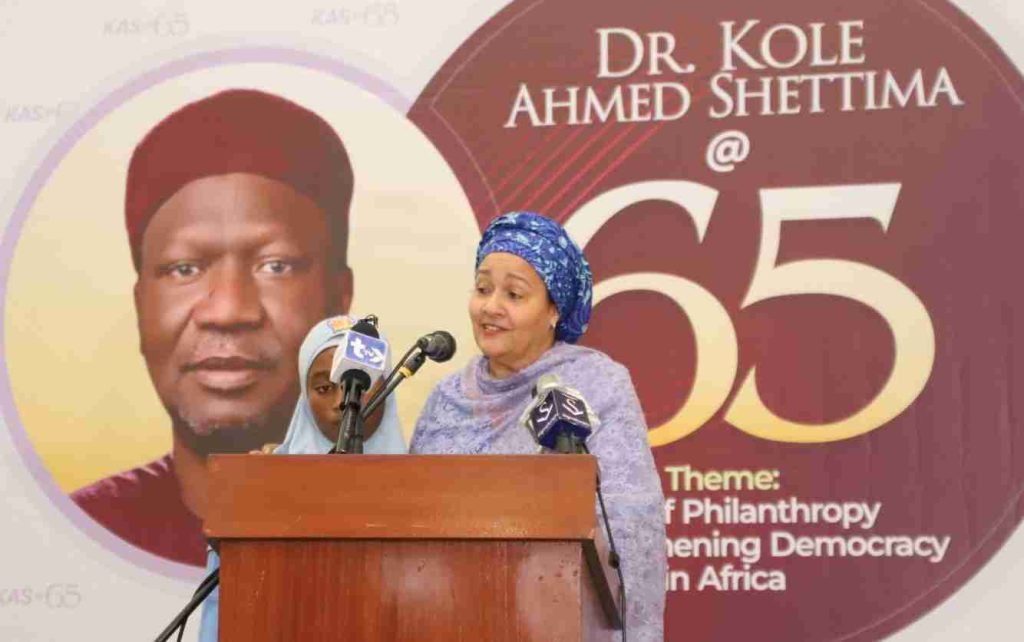
According to Ya’u in the welcome remarks read on his behalf by Comrade John Odah, as he was on transit from Kano, the Committee of Friends of Shettima had resolved to keep the event “as much a secret as a surprise to Kole” because of, one, “his extreme modesty”, and two, his aversion to being the centre of any celebration.
Exposing the social tension and frustration
But beyond the matter of decency and moral disposition of the celebrant, a more profoundly subliminal agenda of the Committee of Friends in convening the symposium was the desire to use the birth anniversary of the alluring personality of Kole Shettima to stoke a dispassionate interrogation and tracking of the emergent contradictory dialectics of Nigeria’s democracy, Shettima’s social or ideological commitments vis-à-vis the conspiracy theories around institutional philanthropy, foreign/international aid or development work.
According to Ya’u, Shettima’s friends were very clear on this. “Here we are, in spite of his protestations, we conspired against his wish, to put this event together. Yet there is a reason why this celebration is important. Kole has dedicated his life to the struggle for democracy and social justice,” Ya’u said, stressing that this is more demanding in the prevailing context of the worrying trajectory of Nigeria/Africa’s democracy that is regressing.
He said: “Our democracy is threatened and we need to rethink how to rescue and protect as well as advance in ways that will make it deliver its promises of freedoms, choices and improved life chances.

“Nigeria, nay Africa, is going through a traumatic moment in its democratisation journey. Over the last couple of months, poverty has deepened in Nigeria. More and more citizens are unable to meet their basic needs.
“In the face of this, we have a government that is not only refusing to respond to the cries of the people but is even hostile to these voices. It is neither responsive nor responding. It is neither accounting nor accountable.
“It is becoming increasingly intolerant to critical views. There is a deepening of lack of accountability and increased insensitivity by the government to citizens’ concerns. In fact, we are seeing the resurgence of impunity as if we are in a military rule.

The poverty, suffering and the failure of, and indeed, refusal of government to address existential problems of the citizens are making citizens to raise fundamental question around what is the purpose of democracy if it cannot respond to the needs of the people. People’s confidence in democracy is weakening and is daily being eroded such that people are openly calling for military takeover as we saw young people did during the end bad governance protests.
“For many of us in this room, as well as those following us on line, there is also a narrative of reform fatigue, informed by the feeling that our efforts are not delivering the expected results. We have put in a lot of efforts in the advocacy and demand for electoral reform, yet we are far away from being satisfied with our elections. This narrative of reform fatigue is leading to resignation among some advocates.”
The symposium, in view of the above framings – either as a scene for birthday solidarity or an arena for social, philosophical or ideological scrutiny – presented a theme under which these diverse expressions connect with either Kole Shettima as an individual with positive inclinations and his society with its prevailing social frustrations and inherent tensions.
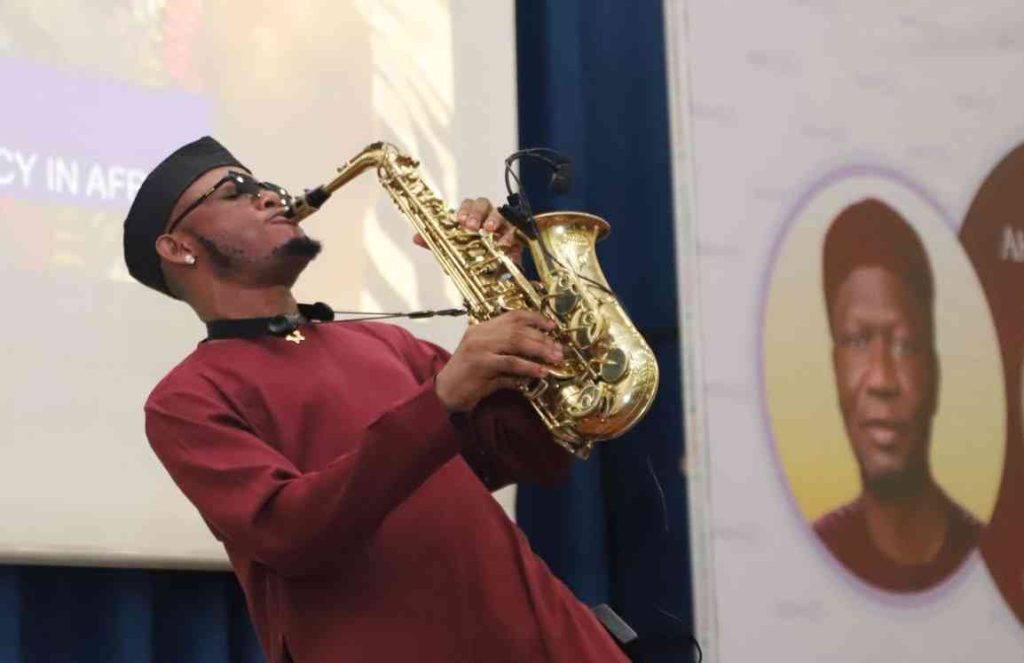
The symposium, taking off promptly some minutes past 10am and enduring till far past 2pm, there was never a dull moment all through – from the articulate Master of Ceremony, the hot opening remarks by the Committee of Friends, the opening remarks of the Chair of the event to the banters and frankness of the solidarity messages, the scholarly or theoretical attention of the keynote speaker, the engaging discourse of the panellists and the interrogation of the audience as well as the conceptually conscious moderator, Kayode Komolafe, who steered the panel of discussants and had to force an end even with many in the audience angling to go on with proceedings as lunchtime glided by.

Prof. Kyari Mohammed, Vice-Chancellor of the Army University, Biu, Borno State, who chaired the event, while dissociating himself from the ‘conspiracy to embarrass’ KAS, spoke directly to the theme of the symposium: “Role of Philanthropy in Strengthening Democracy in Africa” with his posers: whether philanthropy and democracy are good, and whether philanthropy could translate to democracy?
While spiced with banters that drew intermittent laughter of the audience, the solidarity messages, like Committee of Friend’s welcome address, rendered by Odah, profoundly espoused Shettima’s persona.
In his view, Prof Adele Junaidu, who is in his early 80s yet prim and active, “Nigeria, and indeed, the world needs a good person like Kole.”
He confessed that the event, as well as the huge attendance, has some symbolism for him, “namely that Kole is not just a son of Nigeria, but son of the world” in relation to having in attendance the number two person of the world, Mrs Amina Mohammed, the Deputy Secretary General of the United Nations (UN). He therefore stressed that “that symbolism should not be lost on us.”
He further emphasised: “Kole represents for me the beauty of simplicity, the grandeur of simplicity; the dignity in his humanism because he shows great empathy for the other; you know, he has such magic that draws you to him and makes you feel that he is a friend, somebody in whom you can trust. I think we need somebody like that in this world, and particularly today; somebody who shows solidarity. That has had a very, very great impact on me, and of course, I would like to thank him for that.”
Kole’s core character, Junaidu said, among other things, is summed up in what he said Yorubas call ‘Omo’luabi’ – which he interpreted to mean: “that grandeur does not simply means living big, or in making big noise; that there is a silent way, that there is dignity in silence as well.”
Prof. Jibrin Ibrahim, who prefaced his solidarity message with: “This is a great day and a great event,” encapsulated his oratory with what is best titled: “The Parable of Marxism”. Noting that he taught Shettima Marxism in the university, Prof. Ibrahim’s parable goes thus:
“I want to start by making it absolutely clear that I bear no responsibility of Kole going into philanthropy. In fact, I worked very hard to get him on a different path but he simply didn’t listen to me. My claim to fame is that I thought Kole a very, very important course, which is on Marxist Philosophy. Essentially, I always explain to student Kole; look, I’m not just teaching you Marxist philosophy as an academic course and programme; Marxism always has an objective it wants to achieve, and that objective is the Socialist Revolution, and there is a methodology for achieving that, which is that, you must organise the revolution by actively engaging with workers and peasants to create a new world that will serve the interest of the people. So, that is what I taught Kole.

“So, I will always ask Kole; are you ready for that future? He will smile and say, okay, Malam. I didn’t know he had a different plan. But in any case, what I spent a lot of time trying to get Kole to understand is that the world’s system is controlled by American imperialism, and imperialism has a number of methods through which they control the countries in the world. And I pointed out to him that all this issue of foreign aid, development support, is a scam. I remember I made him read this book, Foreign Aid as Imperialism, he read all that, wrote his essays and he understood them. Then what did I find out 35 years later? He went on a totally different path.
“The issue then became, we live in a world today, where I hear an American president say foreign aid is a scam, and then I see all these narratives on WhatsApp that all those in the development community are basically scammers and crooks and assets of American imperialism. So, now I am in a real dilemma. I told Kole, foreign aid is a scam, and Trump is telling me today foreign aid is a scam. I am not in the same intellectual positional situation with Donald Trump.”
Prof. Ibrahim seems to resolve or simplify the path to the problematic posed by his parable, saying: “So, the purpose of this event today is really to reflect on how can we now rethink philanthropy, foreign aid, development work, not as a scam but as a path way to democracy?” While admitting that the answer will be work in progress, he tasked Dr Emmanuel Akwetey, the keynote speaker, to begin the debate in his discourse of the theme: “Role of Philanthropy in Strengthening Democracy in Africa.”
But before Akwetey’s intervention, Amina Mohammed, the Deputy Secretary General of the United Nations (UN), was to kick off the debate.
Starting with an apology for not being physically present at Prof Ibrahim’s birthday last December, an event held in the same auditorium of Yar’Adua Centre, Mohammed commended Dr Shettima for his consistent humility.
“First, let me talk about Kole, the man; because I think it was said earlier. This is a Nigerian, a human being with such a level of humility that makes all of us embarrassed,” the UN deputy scribe told the audience, and turning to Shettima, she said: “So, thank you for being who you are; for the consistency of that and the friendship to everyone of us.”
Again, turning to the audience, Mohammed said: “You may never know the difference; this is Kole, a Nigerian, from somewhere, and no one really knows where.”
In a brief response to Prof. Ibrahim’s parable, Mohammed noted that the philanthropy Dr Shettima is associated with is that which puts people, as human beings, in the centre of their operations. “Prof Jibo,” she said, addressing Prof Ibrahim directly as he is popularly called; “just to avoid the scam, to show us how it should be done, because it is very, very huge philanthropies that have this calibre of persons, leading them these many years, and to shapen the type of philanthropy that puts up people at the centre and delivers on what they said they are going to do.”
Mrs Mohammed while admitting that there are many philanthropies operating in the world today, she however argued that the work done by many of them should not be underestimated. Stating that as one of those who live by the moral code to impact positively on humanity by getting the work done, unlike those who go for the salary, she declared that Shettima is “needed more than ever to show people how philanthropy should be done and how we should network better within philanthropy to work better for democracy.”

For Dr Kayode Fayemi, former governor of Ekiti State who was also minister of Solid Minerals Development under the Buhari presidency, Shettima’s roles transcend philanthropy to national security. He said he is aware of the critical role Shettima played in the fight against insurgency in the country, a role he said many are not aware of except those in the security and intelligence sector.
Fayemi also described Shettima as not only a gentleman but also “an inveterate networker, and humanist who exemplifies empathy in all ways”.
In his keynote address on the theme of the symposium, Dr Akwetey argued that philanthropic interventions became necessary in Africa in the face of political instability. He said by virtue of Shettima’s creative leadership, the MacArthur Foundation emerged to play a pivotal role in advancing democratic governance and fostering sustainable development across Africa, especially in West Africa, and Nigeria in particular.
According to him, over $234 million have been invested, directed mainly on viable initiatives directed at addressing challenges such as weak institutions, corruption, and limited civic participation, while promoting peace, stability, and inclusivity.
“This commitment was instrumental in Nigeria’s democratic transition, particularly in establishing the Fourth Republic – the longest-lasting since independence in 1960.
“In 2023, the MacArthur Foundation, alongside other philanthropic organizations such as the Ford Foundation, Luminate, and Open Society Foundations, launched the West Africa Democracy Fund (WADE), committing $20 million over three years to strengthen democracy in countries facing governance challenges. This initiative aims to enhance citizen engagement, counter military coups, and promote political stability across the region, reflecting the Foundation’s broader commitment to regional development,” Akwetey stated, urging others Africans in leadership positions to draw inspiration from Shettima, whose strategic vision and commitment to governance reforms he said have significantly strengthened democratic institutions in West Africa.
“As a Director at the MacArthur Foundation, Dr Shettima has exemplified how professionals can leverage their expertise, networks, and influence in advancing transparency, accountability, and citizen engagement. His leadership in funding electoral monitoring, judicial reforms, and anti-corruption initiatives demonstrates the transformative impact that well-positioned professionals can have on governance.
“African leaders in politics, business, academia, and civil society can emulate his approach by championing policies that promote good governance, supporting civic participation, and investing in institutions that safeguard democracy.
“Dr Shettima’s work underscores that true leadership goes beyond personal success – it is about shaping institutions that uphold justice, equity, and democratic progress for future generations,” Akwetey said.
Every everyone who spoke beamed light on a fresh and profound component of Dr Shettima – either his personal attributes or institutional impact or both. There was no word uttered by anyone who spoke about Dr Shettima that had no significant symbolism and bearing to his humanism – Prof Okey Ibeanu; Dr. Dauda Garba, Executive Director of CDD; Mrs Habiba Umar Kalgo, Shettima’s secondary school classmate; Mohammed Kati Machina, who represented the Emir of Machina, lifelong friends of Shettima; amongst others. The summary of these views is that Kole Shettima remains a consistent agent of public good.
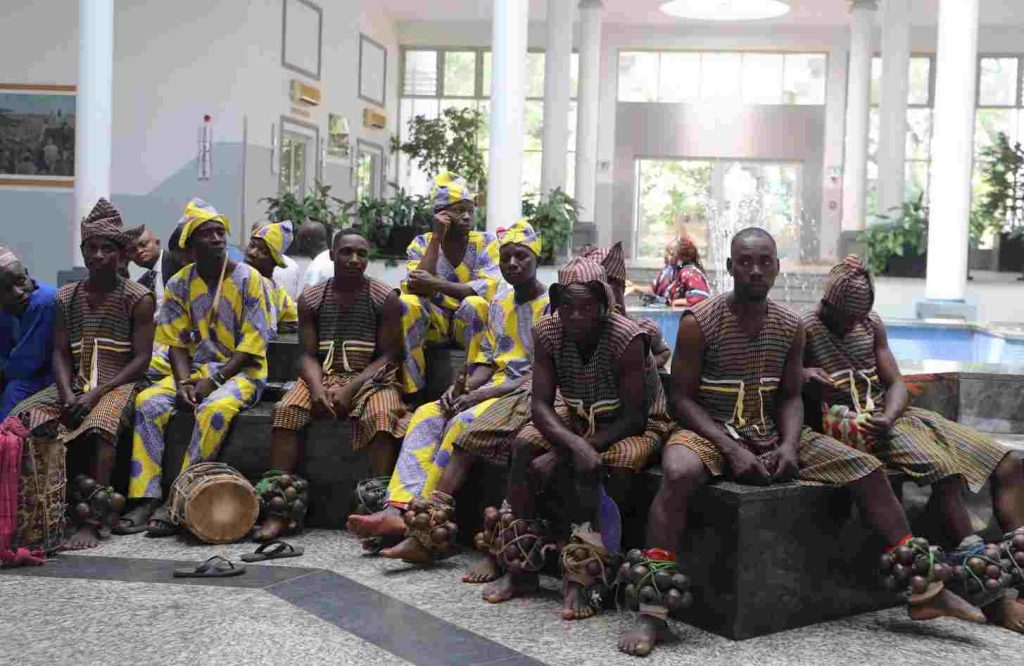
Even those who did not speak, but were present, spoke more than a thousand words with their presence on Shettima’s persona and his diversity of network in the audience – Prof Attahiru Jega, Prof Etannibi Alemika, huge representation from labour, civil society and development community, the indigenous people of Abuja who came via a dancing troupe to perform one of their acts which is said to be done only on ceremonial birthdays and important occasions.
The younger generation was represented by students from the Anglican Girls Grammar School and Epitome Islamic Secondary School, all in Abuja. And with technology, secondary school students from Shettima’s hometown of Machina able to participate via zoom to wish him a happy birthday.
While the Nigerian Presidency may not have been represented at the event, it, however, paid glowing tributes to Shettima in a statement by Bayo Onanuga, President Bola Ahmed Tinubu’s spokesman.
Describing Shettima as a scholar and activist who has contributed immensely to nation-building, President Tinubu praised his role in the sustenance of Nigeria’s democracy and advancement of human rights, peace and justice.
Tinubu also acknowledged MacArthur Foundation’s assistance in mentoring new non-state actors and supporting government and non-governmental organisations in addressing pressing developmental challenges.
