


By Amos Aar
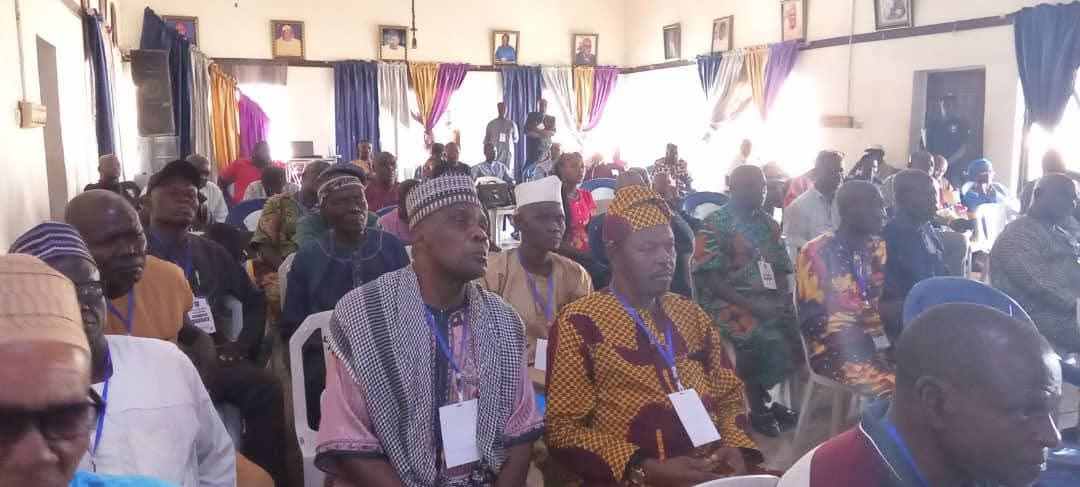
THE BENUE State chapter of the Nigerian Union of Pensioners (NUP) has re-elected Comrade Michael Vembe as its chairman following an electoral process during the union’s state quadrennial delegates conference held Thursday at the Makurdi Club 1930.
Comrade Bumi Ogunikolade, the Principal Assistant Secretary of NUP and chairman of the electoral committee, announced the results, confirming Vembe’s victory.

Vembe secured 38 votes to defeat his closest rival, Comrade Onah Omerikwo, who garnered nine votes.
Other contestants, Comrades Kwaghmande-Kwaghmande and Teghtegh Dakor, received three and one votes, respectively.
Ogunikolade also announced the election of other executives, including Bishop Michael Agada as Vice Chairman, Obanike James as Treasurer, and Mrs. Dorcas Boko as Auditor. Additionally, Dominic Saawuan and Lawrence Adokwu emerged as Trustees 1 and 2, respectively.
Dignitaries present at the event, include NUP Vice President North Central, Dr. Asen Sambe, Special Adviser to the Governor on Labour Matters, Iyoo Igbondo, and NLC Chairman, Benue State Council, Terungwa Igbe, commended the candidates for their sportsmanship, which they said contributed to the smooth conduct of the election.
They urged union members to remain united and support the present administration, emphasizing that collective efforts would yield greater benefits for pensioners.
In his acceptance speech, Comrade Vembe expressed gratitude to members for their support and to the national secretariat for ensuring a free and fair election. He pledged to elevate the union’s status and work in the best interest of pensioners.
He also praised Governor Hyacinth Alia for prioritising pension matters, including the timely payment of pensions and gratuities and the approval of subsidised treatment for senior citizens at the Benue State University Teaching Hospital (BSUTH). Vembe assured the governor of the union’s continued support.
However, one of the chairmanship candidates, Comrade Teghtegh Dakor, criticised the electoral process, alleging irregularities.
He claimed that the election was militarised and marred by vote-buying, stating that observers were denied access to the venue and that delegates were not transparently displayed until the day of the election.
“It was a militarised election, and the incumbent used money to buy delegates. Observers were restricted from entering the venue. Delegates were camped in a hotel, and money was transferred into their accounts. The entire process was not transparent,” Dakor alleged.
